If acne-like bumps show up almost exclusively on your butt and thighs while your face stays clear, they may not be classic acne vulgaris at all. Keratosis pilaris, folliculitis, ingrown hairs and friction-related follicular irritation commonly affect these areas because the follicles are exposed to clothing, pressure, shaving, sweat and repeated skin contact.
The location is not random.
And treating it like an oily-face problem can send the routine in exactly the wrong direction.
Why Do I Only Get Acne on My Butt and Thighs?
Bumps limited to the buttocks and thighs usually suggest that something local to those areas is affecting the hair follicles.
Think about how differently this skin lives compared with your face.
Your butt spends hours under clothing and pressure.
The upper thighs rub against fabric and sometimes against each other.
Many people shave or wax these areas.
Workout clothes can keep them warm and damp.
Then there is keratosis pilaris, which has a natural tendency to affect the thighs.
AAD specifically describes KP as tiny rough follicular bumps that commonly occur on the thighs, while folliculitis can develop when follicles are damaged by tight clothing, rubbing, shaving or hot, damp conditions.
So if this is the only area breaking out, I would investigate body-specific follicular mechanisms before blaming hormones, diet or facial-style oil production.
Is Acne on the Butt and Thighs Actually Acne?
Sometimes.
But “butt acne” and “thigh acne” are consumer descriptions, not diagnoses.
True acne can occur on the body.
The problem is that several other follicular conditions look enough like pimples to get called acne:
- folliculitis
- keratosis pilaris
- ingrown hairs
- friction-related irritation
- acne mechanica
- occasionally deeper inflammatory conditions
That distinction is not cosmetic nitpicking.
A blackhead, a keratin plug and an inflamed hair follicle may all create a bump.
They do not require identical treatment.
Why Is Keratosis Pilaris So Common on the Thighs?
KP has a strong predilection for the thighs because it is a disorder of follicular keratinization, and the thighs are one of its classic sites.
Keratinized cells accumulate around follicular openings instead of shedding cleanly.
Multiply that across hundreds of follicles and the skin begins to feel rough, dry or sandpapery.
The bumps are usually small.
Fairly uniform.
Sometimes skin-colored.
Sometimes red, brown or darker than the surrounding skin.
AAD notes that KP most often appears on the upper arms and thighs and describes the bumps as plugs of dead skin cells in hair follicles.
This is exactly why someone can have a perfectly clear face and still have “acne” all over both thighs.
It may never have been acne.
How Can I Tell If My Thigh Bumps Are Keratosis Pilaris?
KP tends to create many tiny, fairly uniform rough bumps rather than isolated classic pimples.
Run your hand across the area.
Does it feel rough even where the bumps aren't particularly red?
Does the texture resemble permanent goosebumps?
Do both thighs look relatively symmetrical?
Does it get more obvious when your skin is dry?
Those clues fit KP.
AAD also notes that KP can itch, become more noticeable in dry weather and appear in colors ranging from skin-colored or white to red, purple or dark brown depending on skin tone.
A cluster of inflamed pustules is a different story.
Why Is Folliculitis Common on the Butt and Thighs?
Because these areas experience a lot of follicular stress.
Hair follicles can become inflamed after repeated rubbing, tight clothing, shaving or waxing.
Heat and moisture make the environment less forgiving.
AAD specifically notes that tight clothing, skin-on-skin rubbing and shaving can damage follicles, and that hot, damp skin is easier to injure. Mayo similarly lists tight clothing, shaving and waxing among folliculitis risk factors.
The butt and thighs check quite a few of those boxes.
This is why tiny follicular pustules after a sweaty workout tell a different story than blackheads across an oily forehead.
What Does Folliculitis on the Butt and Thighs Look Like?
Folliculitis often creates small inflamed bumps or pustules centered directly around individual hairs.
They may itch.
They may feel tender.
Sometimes several appear at once.
If you look closely, the follicle often sits right in the middle.
This differs from KP, where the overall impression is usually rough texture, and from acne, where you may see mixed lesion types including comedones.
AAD even notes that folliculitis bumps frequently appear on areas covered by clothing, including the buttocks and thighs.
Location again.
Useful clue.
Why Do My Butt and Thigh Bumps Get Worse in Leggings?
Tight leggings create repeated fabric contact while holding heat and moisture close to the skin.
That can aggravate folliculitis-prone skin.
It can also make KP feel more irritated if fabric continuously rubs already rough follicles.
This doesn't mean leggings are inherently bad.
Fit matters.
Fabric matters.
Duration matters.
A pair you wear through a one-hour workout is one thing.
Wearing the same damp leggings through the workout, drive home, grocery store and three hours at your laptop is another.
Your follicles know the difference.
Does Thigh Rubbing Cause Acne?
Not exactly.
Skin-on-skin friction can irritate follicles and worsen acne-like bumps, but friction is not the same mechanism as classic acne vulgaris.
AAD explicitly includes skin rubbing against skin as a way follicles can become damaged and develop folliculitis.
If your bumps cluster mainly on the inner thighs where the legs make contact, mechanical irritation belongs high on the list.
And the answer is not to exfoliate the friction harder.
That's adding friction to friction.
Reducing unnecessary rubbing and supporting the barrier often matters just as much as the active ingredient.
Why Do I Get Bumps on the Back of My Thighs?
The backs of the thighs live under pressure more often than people realize.
You sit on them.
Clothing presses against them.
Workout equipment contacts them.
Hair follicles in the area can also develop KP, folliculitis and ingrowns.
If the bumps are rough and uniform, think KP.
If they're inflamed and centered around hairs, folliculitis becomes more plausible.
If they're isolated and appear after hair removal, think ingrown hair.
The map helps narrow the mechanism.
Why Do I Get Butt Bumps but Never Face Acne?
Because the biological problem on your butt may have very little to do with facial sebum production.
This is one of the clearest clues that face-acne logic may not transfer.
Facial acne is strongly tied to the pilosebaceous unit, where sebum, abnormal keratinization and inflammation interact.
But your butt may instead be dealing with:
keratin plugs.
hair-removal trauma.
follicular infection.
repeated pressure.
occlusion.
Those don't require your face to be oily or acne-prone.
You can have glass-skin cheeks and an entire follicular situation happening under your underwear.
Skin is allowed to multitask.
Does Having Clear Facial Skin Mean It Can't Be Acne?
No.
You can have body acne without facial acne.
But a clear face plus highly localized butt-and-thigh bumps makes local body factors particularly worth examining.
Where exactly are the bumps?
What do they look like?
Do they itch?
Are there blackheads?
Do they flare after shaving?
After cycling?
Only under tight clothing?
These clues usually tell you more than trying to force the face and butt into one diagnosis.
Why Does Shaving Cause Bumps Only on My Thighs and Butt?
Because the hair-removal event is happening there.
A razor cuts the hair close to the skin.
The follicular opening may become irritated.
A regrowing hair can become trapped or curve back into the skin.
Now you have an ingrown.
If several follicles become inflamed after shaving, you may develop shaving-related folliculitis.
This is very local biology.
Your forehead has no reason to participate.
How Can You Tell an Ingrown Hair From Thigh Acne?
An ingrown hair is usually more isolated and often follows shaving or waxing.
Sometimes you can see the hair beneath the skin.
The bump may be tender.
It can darken afterward.
Acne does not require a trapped hair.
If every “pimple” starts appearing two or three days after shaving the bikini line, posterior thighs or buttocks, I would not treat that timing as a coincidence.
Change the hair-removal technique.
Then manage the follicular surface between sessions.
Can Working Out Cause Butt and Thigh Acne?
Exercise itself does not create acne.
But sweating under tight workout clothes can create conditions that aggravate follicles on exactly these areas.
AAD recommends changing promptly after workouts and showering when tight exercise clothing contributes to folliculitis.
Think cycling shorts.
Compression leggings.
Seams against the upper thigh.
Pressure against a bike seat.
That's a very specific mechanical environment.
Your face doesn't live there.
Does Sitting Cause Butt Acne?
Sitting doesn't directly cause acne vulgaris.
But prolonged pressure can aggravate irritated follicular skin.
This becomes more relevant if you're sitting in tight clothing, sweating or already dealing with follicular congestion.
The same idea applies to the backs of the thighs.
If the eruption corresponds exactly to pressure points, the furniture isn't infecting you.
The mechanical environment is simply contributing.
Could My Underwear Be Causing Butt and Thigh Bumps?
It can aggravate them.
Watch the pattern.
Do bumps trace the leg opening?
The waistband?
A particular seam?
Does one fabric trap much more heat than another?
That's useful information.
The underwear itself may not be the primary condition. Someone with KP still has KP without the underwear.
But persistent rubbing can make an existing follicular problem look redder and angrier.
Mechanical triggers modify skin conditions.
They don't always create them from scratch.
Can Sweat Clog the Follicles on My Butt?
“Sweat clogs pores” is too simplistic.
Sweat exits through sweat ducts rather than sebaceous follicles.
But prolonged moisture, heat and occlusion can make follicular irritation and folliculitis more likely.
So the better recommendation is not “don't sweat.”
It's:
don't stay in damp clothing indefinitely.
Change.
Shower when practical.
Let the skin dry.
Simple.
Why Doesn't My Face Acne Wash Fix My Butt and Thigh Bumps?
Because a cleanser designed around facial oil control may not address the mechanism creating those body bumps.
If the problem is KP, you need keratin management.
If it's ingrown hairs, you need better regrowth conditions.
If it's friction-induced folliculitis, the friction needs attention.
If the surrounding skin is dry, a stripping wash can actually reduce barrier tolerance.
This is where body care needs a different formulation philosophy.
Not weaker.
Different.
Should Butt and Thigh Skin Be Moisturized If It Breaks Out?
Yes.
Moisturization is particularly important when the bumps involve KP, dry follicular buildup or skin being repeatedly exposed to friction and exfoliation.
AAD recommends moisturizer as a core part of KP management and notes that products containing ingredients such as lactic acid can combine moisturization with keratolytic activity.
Barrier support does not mean coating the area in the heaviest substance you can find.
It means maintaining enough hydration and flexibility that the skin can function and tolerate treatment.
Drying everything out is not a strategy.
Why Can Dry Skin Make Thigh Bumps Look Worse?
Dry stratum corneum is rougher.
Scale becomes more visible.
Follicular plugs feel sharper.
The entire surface catches light differently.
AAD specifically notes that dry skin makes KP more noticeable and that the condition often flares in dry environments.
This is why someone may think their thigh “acne” got dramatically worse in winter.
Maybe the number of follicles didn't change much.
The barrier environment did.
Should You Scrub Butt and Thigh Bumps?
Not aggressively.
Harsh scrubbing can add inflammation and friction to skin already dealing with a follicular problem.
This matters whether the bumps are KP or folliculitis.
AAD's KP guidance recommends gentle exfoliation and specifically warns against scrubbing because irritation can worsen the condition.
Physical exfoliation can still be useful.
But physical exfoliation and aggressive abrasion are not synonyms.
You want controlled removal of loose surface buildup.
Not pink skin.
What Is the Difference Between Physical and Chemical Exfoliation for These Bumps?
A physical exfoliant uses controlled contact to remove loosened cells from the skin surface.
A chemical exfoliant uses ingredients such as AHAs or salicylic acid to loosen accumulated keratin.
This distinction is especially useful on the thighs and buttocks because follicular buildup can have both a surface and a keratinization component.
The sequence makes sense too.
Clear loose surface buildup gently.
Then use the leave-on chemical exfoliant against skin that isn't buried beneath unnecessary scale.
What doesn't make sense is scrubbing until the skin is inflamed and then applying the strongest acid you own.
That's not synergy.
That's an incident report.
Is Salicylic Acid Good for Butt and Thigh Bumps?
It can be.
Salicylic acid is a chemical exfoliant that can help manage accumulated cells and follicular congestion.
AAD includes salicylic acid among ingredients used to improve KP texture.
It can also be useful in acne-prone follicular skin.
But ingredient choice still follows diagnosis.
Salicylic acid is not an antibiotic.
It isn't an antifungal.
And it can't remove the clothing friction causing a recurrent follicular flare.
Useful tool.
Not magic diagnosis in a bottle.
Is Lactic Acid Good for Butt and Thigh Bumps?
Yes, particularly when rough texture and dryness are part of the problem.
Lactic acid is an AHA that helps loosen keratinized surface cells and can be incorporated into moisturizing body lotions.
AAD specifically includes lactic acid in KP treatment and moisturization guidance.
That combination is particularly logical for thighs.
Exfoliate.
Hydrate.
Support the barrier.
Instead of stripping first and trying to repair the collateral damage later.
Does Benzoyl Peroxide Help Butt and Thigh Bumps?
It can help certain bacterial or acne-related situations, but it isn't the universal answer.
True inflammatory acne may respond to benzoyl peroxide.
Some superficial bacterial follicular problems may be managed differently depending on the diagnosis.
KP will not become un-KP because you applied an antibacterial acne active.
And an ingrown hair still has a hair trapped beneath the skin.
This is why the visual word “pimple” is not enough information.
Can Butt and Thigh Bumps Be Fungal?
Folliculitis can have fungal causes, including Malassezia folliculitis, although Malassezia has a stronger tendency to affect the upper trunk.
If bumps are highly uniform and itchy or fail ordinary acne treatment, a dermatologist can help determine what they actually are.
Don't blindly rotate antibacterial and antifungal products until something changes.
Diagnosis is a much more elegant experiment.
When Are Butt and Thigh Bumps Hidradenitis Suppurativa?
HS belongs in the conversation when deep painful lumps recur in areas such as the buttocks, groin or upper thighs, particularly when they drain, scar or form tunnels beneath the skin.
AAD specifically identifies deep acne-like cysts in the buttocks and upper thighs as one clue that stubborn “acne” may actually be HS.
This is not ordinary rough thigh texture.
And it is not something to scrub.
Recurrent deep lesions deserve a dermatologist because earlier HS treatment can help prevent progression.
When Should You See a Dermatologist for Butt and Thigh Acne?
Get evaluated when the bumps are:
deep or very painful,
repeatedly draining,
spreading,
scarring,
intensely itchy,
or not improving after several weeks of a reasonable routine.
Also see a dermatologist when you're simply unsure what you're looking at.
AAD notes that folliculitis is frequently mistaken for acne and that a dermatologist can distinguish between the two.
Sometimes the most effective new product is a better diagnosis.
What's the Best Routine for Bumps Only on the Butt and Thighs?
First remove the obvious local triggers.
Change out of damp workout clothes.
Pay attention to friction.
Adjust shaving or waxing if bumps clearly follow hair removal.
Then work on the follicular surface.
Use gentle physical exfoliation rather than rough scrubbing.
Follow with a leave-on chemical exfoliant appropriate for follicular keratin buildup.
Moisturize.
Support the barrier.
And stay consistent long enough to see whether the pattern changes.
The point is not to make the butt and thighs behave like your face.
It's to treat the biology they actually have.
THE SKINBOSS PERSPECTIVE
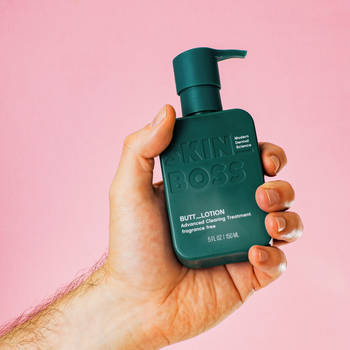
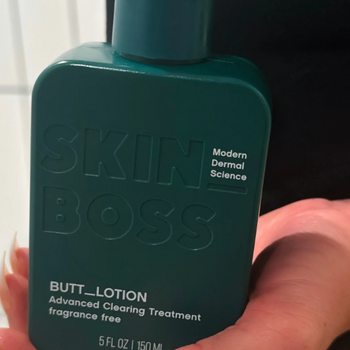
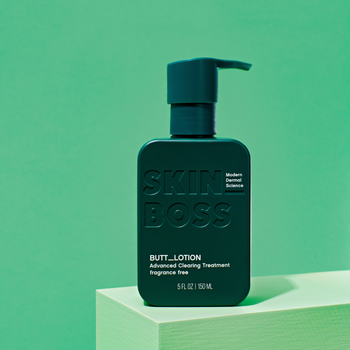
If the bumps live on your butt and thighs while your face stays clear, SKINBOSS takes that location seriously. THE LUXE LOOP™ provides controlled physical exfoliation first, followed by THE BUTT ACNE TREATMENT™ with salicylic acid + Lactiv® Complex for moisturizing chemical exfoliation and barrier support; THE PEACH PATCH™ can protect an appropriate individual bump from picking and friction. That's intentionally different from stripping body skin with oily-face acne logic. Clear the follicular buildup, reduce the local triggers and keep the barrier intact.
References
- American Academy of Dermatology Association / Acne-like breakouts could be folliculitis — https://www.aad.org/public/diseases/a-z/folliculitis
- American Academy of Dermatology Association / Keratosis pilaris: Overview — https://www.aad.org/public/diseases/a-z/keratosis-pilaris-overview
- American Academy of Dermatology Association / Keratosis pilaris: Signs and symptoms — https://www.aad.org/public/diseases/a-z/keratosis-pilaris-symptoms
- American Academy of Dermatology Association / Keratosis pilaris: Diagnosis and treatment — https://www.aad.org/public/diseases/a-z/keratosis-pilaris-treatment
- American Academy of Dermatology Association / Keratosis pilaris: Self-care — https://www.aad.org/public/diseases/a-z/keratosis-pilaris-self-care
- Mayo Clinic / Folliculitis: Symptoms and causes — https://www.mayoclinic.org/diseases-conditions/folliculitis/symptoms-causes/syc-20361634
- American Academy of Dermatology Association / Is that stubborn acne really acne? — https://www.aad.org/public/diseases/acne/really-acne/stubborn-acne
SKINBOSS JOURNAL of MODERN DERMAL SCIENCE