Body acne often gets worse in humid weather because heat increases sweating while humidity slows evaporation, leaving skin damp under clothing for longer. Add friction, pressure and occlusion around hair follicles, and you create an environment that can aggravate acne, folliculitis and other acne-like body bumps.
Humidity isn't the diagnosis.
It's the environment.
And body skin reacts to its environment constantly.
Does Humidity Actually Cause Body Acne?
Humidity does not directly create acne by physically clogging your pores. It can, however, create conditions that make several kinds of body breakouts easier to trigger or harder to control.
Hot humid weather usually means more perspiration.
Sweat evaporates less efficiently when the surrounding air is already saturated with moisture.
Your shirt stays damp.
The waistband stays damp.
The sports bra stays damp.
Then those wet fabrics continue rubbing against skin as you move.
For someone with acne-prone or folliculitis-prone body skin, that's meaningful.
AAD specifically describes acne mechanica as acne triggered when clothing or equipment traps heat and sweat against the skin while repeatedly rubbing it.
So no, humidity isn't an acne ingredient.
It changes the follicular neighborhood.
Why Does My Back Break Out More in Summer?
The back is almost designed for humid-weather trouble.
It contains active sebaceous follicles, so genuine acne vulgaris is common there.
Then summer adds:
sweat,
shirts,
backpacks,
sports bras,
car seats,
gym benches,
and hours of fabric contact.
If sweat stays trapped under clothing, friction rises.
AAD recommends changing out of sweaty workout clothing promptly and avoiding items that repeatedly rub acne-prone back skin.
This is why someone can have fairly calm bacne in February and suddenly feel like their shoulder blades staged a revolt in July.
Same back.
Different environment.
Why Does My Butt Break Out More When It's Humid?
Because butt skin spends most of the day occluded.
That's true in January too.
Summer just turns the dial.
Underwear holds sweat close to the skin.
Shorts add another layer.
You sit.
You walk.
Fabric moves over the same follicular surface repeatedly.
And unlike the back, many bumps on the buttocks aren't classic acne vulgaris in the first place.
Folliculitis, keratosis pilaris, ingrown hairs and friction-related irritation can all masquerade as “butt acne.”
That makes humidity especially relevant because moisture and rubbing are powerful local aggravators of follicular skin.
If every butt bump gets treated like an oily facial pimple, the routine can miss the entire point.
Does Sweat Clog Your Pores?
Not in the simplistic way the phrase suggests.
Sweat comes primarily from eccrine sweat glands and reaches the skin through sweat ducts. It is not the same material as sebum inside the pilosebaceous follicle.
So “sweat clogs pores” is sloppy skin science.
What matters is what happens around sweaty skin.
Sweat mixes with skin debris and products.
Clothing traps moisture.
The skin surface softens.
Friction increases.
People wipe the sweat aggressively.
And some follicles become irritated.
That's a much more convincing mechanism than imagining each bead of sweat plugging a pore like candle wax.
Can Sweat Still Make Acne Worse?
Yes.
The distinction is between sweat itself and the environment sweating creates.
AAD advises people with acne to gently pat sweat away rather than rubbing it, because friction can aggravate breakouts. It also recommends showering after exercise and changing out of sweaty clothing.
That tells you something important.
Sweat management is mostly about:
reducing prolonged moisture,
reducing rubbing,
and removing residue without over-cleansing.
You do not need to fear perspiration.
Humans are supposed to sweat.
What Is Acne Mechanica?
Acne mechanica is acne caused or aggravated by repeated pressure, friction, heat and occlusion over acne-prone skin.
It is particularly common in athletes.
Think:
a backpack rubbing the shoulders,
a sports-bra band across the chest,
tight synthetic clothing,
protective padding,
or a weightlifting belt.
AAD specifically notes that clothing and sports equipment can trap heat and sweat, then repeatedly rub heated skin and trigger acne mechanica.
Humidity makes that setup easier to create without even stepping inside a gym.
Your ordinary clothes become the equipment.
What Does Acne Mechanica Look Like?
It can start surprisingly subtly.
AAD describes early acne mechanica as small rough-feeling bumps that may be easier to feel than see. With continued friction, these can progress to visible pimples and sometimes deeper inflammatory lesions.
That detail is useful.
If you notice rough little bumps appearing precisely underneath a tight waistband every August, that's different from random acne all over your torso.
The map matters.
Your clothing may be drawing it.
Can Humid Weather Cause Folliculitis?
It can increase conditions that favor folliculitis.
Folliculitis is inflammation of a hair follicle, and hot, damp skin plus friction can make follicles easier to injure.
AAD specifically recommends wearing loose clothing in hot and humid weather because tight clothing rubbing the skin can injure follicles and contribute to folliculitis.
Mayo also identifies clothing that traps heat and sweat, tight clothing, excessive sweating, shaving and waxing as folliculitis risk factors.
That's why a humid-weather “acne flare” deserves a closer look.
Maybe it's acne.
Maybe you're looking at inflamed follicles.
How Can You Tell Folliculitis From Humidity-Related Acne?
Folliculitis often has a more follicular pattern.
Look closely.
Are the bumps centered around individual hairs?
Are many of them similar in size?
Do they itch?
Are some pustular?
True acne is more likely to give you a mixture of lesions, including blackheads and whiteheads.
Folliculitis may instead look like dozens of little follicle-centered pimples.
Mayo notes that folliculitis can produce clusters of small bumps or pimples around follicles and may itch, burn or feel tender.
The difference matters because folliculitis is not one disease either.
Bacterial.
Fungal.
Physical.
Different causes require different responses.
Why Does Humidity Make Folliculitis Worse?
Because wet, warm, occluded skin is easier to irritate.
Take one follicle.
Put it under damp compression fabric.
Rub it several thousand times while walking.
Repeat daily.
Now imagine that skin has also been freshly shaved.
Humidity isn't magically infecting the follicle.
It is helping create a situation in which barrier disruption and follicular damage become more likely.
Sometimes body skincare is less about “What ingredient am I missing?” and more about “Why is this follicle living in a sauna under Lycra?”
Is Humid-Weather Body Acne Really Fungal Acne?
Sometimes acne-like summer bumps can be Malassezia folliculitis, commonly called fungal acne.
But do not diagnose every humid-weather breakout as fungal.
Malassezia folliculitis usually produces relatively uniform, frequently itchy follicular bumps and tends to favor the upper chest, shoulders and back.
Warm, moist environments can favor Malassezia proliferation.
Still, true acne and bacterial or frictional folliculitis can also flare in summer.
Uniform and itchy?
Interesting clue.
Not a home laboratory result.
If the eruption is persistent or behaving differently from your normal acne, see a dermatologist.
Why Does Fungal Acne Like Humid Weather?
Malassezia is a lipophilic yeast that normally lives on human skin.
Warm, moist conditions can favor overgrowth in susceptible individuals.
That's one reason a recurring crop of itchy, almost identical chest or upper-back bumps during hot weather deserves consideration beyond ordinary acne.
But this is exactly where the phrase body acne becomes dangerously broad.
Salicylic acid may be useful for follicular congestion.
It is not antifungal therapy.
If yeast is driving the eruption, diagnose and treat yeast.
Don't simply exfoliate harder because the bumps are small.
Can Heat Rash Look Like Body Acne?
Very much so.
Heat rash, or miliaria, develops when sweat flow becomes obstructed within sweat ducts.
That is a completely separate mechanism from acne vulgaris and folliculitis.
Small red, clear or prickly bumps may appear during hot humid conditions, particularly underneath clothing or in areas where sweat stays trapped.
Notice the mechanism distinction:
Acne involves pilosebaceous follicles.
Folliculitis involves inflamed hair follicles.
Heat rash involves sweat ducts.
All three can produce little summer bumps.
Skin has terrible respect for consumer-friendly categories.
How Do You Tell Heat Rash From Body Acne?
Heat rash often develops quickly during intense heat or sweating and may feel prickly or itchy.
It tends to improve when the skin cools and the sweating/occlusion decreases.
Acne is less directly dependent on that immediate environmental switch.
If you leave the heat, wear loose clothing and the rash settles quickly, that's useful information.
If blackheads and inflammatory pimples remain across the back for months, that's more acne-like.
Again, the history matters.
A photograph gets one moment.
Your timeline gets the mechanism.
Does Humidity Increase Sebum Production?
Skin biology can change with season, temperature and environment, but humidity-related body breakouts should not automatically be reduced to “more oil.”
That simplification especially fails on the buttocks and thighs.
The back and chest are genuinely sebaceous sites where oil can matter in acne vulgaris.
The buttocks are different.
KP is different.
Folliculitis is different.
Friction is different.
This is why a body-care brand needs site-specific logic rather than repeating facial acne language from forehead to ankle.
Why Doesn't Face-Acne Logic Always Work in Humid Weather?
Because you may not be treating a sebum problem.
You notice more body bumps.
So you buy the strongest oil-control cleanser.
Then an astringent.
Then you skip moisturizer because it's July.
Meanwhile, your actual problem might be frictional folliculitis under damp clothing.
Now you have inflamed follicles plus a stressed barrier.
That's not progress.
Modern body care requires asking what is happening inside and around the follicle before removing every lipid you can find.
Can Humid Weather Dry Out Your Skin Too?
Yes, strangely enough.
Humidity does not guarantee a perfect barrier.
AAD notes that skin can still become dry and irritated during hot, humid weather because of sun exposure, swimming and air conditioning. It recommends mild cleansing and moisturizer after bathing rather than assuming summer skin needs no moisturization.
Think about your average summer day.
Hot outside.
Air-conditioned office.
Pool after work.
Shower.
Another shower.
Chemical exfoliant.
Skin can absolutely end up dry.
Even while you feel sweaty.
Should You Stop Moisturizing Body Acne in Summer?
No.
Sweaty skin and hydrated skin are not the same thing.
Sweat is water and electrolytes on the surface.
Barrier hydration refers to water retention and functional integrity within the stratum corneum.
Those are different.
If your acne treatment or repeated showering is leaving the skin dry, you still need barrier support.
Choose a body moisturizer suited to your skin and climate.
Maybe lighter in August than January.
But “humidity exists” is not a dermatologic reason to abandon moisturizer.
Can Heavy Body Lotion Make Humid-Weather Breakouts Worse?
For some people, yes.
A very rich occlusive formula beneath tight clothing may feel excessive in hot weather and can increase the sense of occlusion.
But don't turn this into ingredient superstition.
The finished formula matters.
Amount matters.
Application area matters.
Your actual skin response matters.
A lightweight lotion may simply be more comfortable when humidity is high.
That is not the same as saying moisturization causes acne.
What Type of Body Lotion Is Best in Humid Weather?
Look for a texture you will actually use consistently.
For many people, that means a lotion, fluid emulsion or gel-lotion rather than a very heavy butter.
The formula should hydrate without leaving a thick film under clothing.
If you're acne-prone, non-comedogenic positioning can be helpful.
If you're also managing rough follicular buildup, a moisturizing lotion that incorporates a chemical exfoliant can simplify the routine.
One product doing two jobs intelligently beats six sticky layers under July denim.
Can Sunscreen Make Summer Body Acne Worse?
A sunscreen that doesn't agree with your skin can contribute to breakouts, but skipping sunscreen is not the answer.
For acne-prone exposed skin, choose a product labeled non-comedogenic or oil-free if that works better for you.
And remember where body sunscreen goes.
Chest.
Shoulders.
Back.
Upper thighs.
These can all be breakout-prone areas.
The correct solution is a compatible sunscreen.
Not ultraviolet exposure as acne treatment.
Can Sweat-Proof Sunscreen Trap Heat?
Water-resistant formulas are intentionally designed to stay on through sweating and water exposure.
That is useful.
But if you're acne-prone, the rest of the routine matters.
Remove sunscreen appropriately at the end of the day.
Shower after prolonged sweating.
Use a product your body skin tolerates.
Again, the answer isn't to strip the skin three times.
One thorough gentle cleanse beats repeated irritation.
Should You Shower More Often in Humid Weather?
You may need to shower after heavy sweating, but more showers are not automatically better skin care.
If you work out at lunch and arrive home drenched after a humid commute, yes, cleansing makes sense.
If you're showering four times a day with hot water and antibacterial soap because you think sweat is dirty, your barrier may disagree.
AAD recommends gentle washing and warm rather than hot water for acne-prone and summer skin.
Remove sweat.
Don't remove the skin.
Should You Shower Immediately After Sweating?
As soon as reasonably practical is useful, especially when you are prone to body acne or folliculitis.
AAD recommends showering and changing after workouts or other activities that make you sweat.
But don't turn “as soon as possible” into panic.
The key is avoiding hours in saturated tight clothing.
Finish your workout.
Change.
Shower when practical.
Your follicles will survive the drive home.
What If You Can't Shower Right Away?
Change out of damp clothes.
That alone removes a huge part of the problem.
A wet sports bra against the chest or soaked leggings against the buttocks create prolonged heat, moisture and rubbing.
Get dry fabric on the skin.
Then shower when you can.
A perfect routine you cannot follow is less useful than one good intervention you actually do every day.
Are Moisture-Wicking Clothes Better for Body Acne?
They can be.
AAD specifically recommends moisture-wicking clothing for acne mechanica because it pulls perspiration away from the skin and can reduce friction.
This is particularly helpful during workouts.
But moisture-wicking fabric is not magic.
If it's extremely tight and rubbing one exact spot repeatedly, you're still creating friction.
Good fabric plus good fit.
Not one or the other.
Are Loose Clothes Better in Humid Weather?
For folliculitis-prone skin, often yes.
AAD specifically recommends loose clothing during hot humid weather to reduce friction against damp skin.
This doesn't mean you need to abandon fitted clothes permanently.
Think of it as a flare-management tool.
If your butt and thighs are already covered in angry follicular bumps, maybe today's shapewear isn't helping.
Your epidermis did not sign the compression agreement.
Do Tight Leggings Cause Summer Butt Acne?
They can aggravate acne-like butt bumps.
Leggings create close contact over almost the entire buttock and thigh surface.
Add perspiration.
Then walking.
Sitting.
Car seats.
A workout.
Now the same damp fabric is moving against thousands of follicles.
If your summer butt bumps improve when you spend several days in loose shorts, pay attention.
That's not a randomized trial.
It's still useful personal data.
Why Do Inner-Thigh Bumps Get Worse in Humidity?
Inner thighs add skin-on-skin friction to the equation.
Humidity keeps skin damp.
Damp skin rubs differently from dry skin.
Then clothing may add another friction layer.
The result may be chafing, irritated follicles, ingrown hairs or folliculitis.
Not every inner-thigh bump needs a strong acne active.
Sometimes the first intervention is simply reducing rubbing.
The follicle cannot be chemically exfoliated out of a mechanical problem.
Can Humidity Make Keratosis Pilaris Worse?
Humidity itself often makes dry KP feel somewhat better because environmental moisture can reduce surface dryness.
But real summer behavior complicates that.
Swimming.
Sun.
Hair removal.
Sweaty friction.
Repeated showers.
Air conditioning.
These can irritate KP-prone skin even during humid weather.
If your normally skin-colored KP turns red after days in tight damp clothes, that doesn't necessarily mean you're forming dramatically more keratin plugs.
The follicles may simply be more irritated.
Is Summer KP the Same as Summer Body Acne?
No.
KP is a chronic keratinization disorder.
Acne vulgaris is a pilosebaceous inflammatory disorder.
Folliculitis is inflammation of the follicle.
They can all look bumpier in summer for different reasons.
This is precisely why I dislike “summer body acne” as a diagnosis.
It's a useful search term.
Biologically, it's a grab bag.
Should You Exfoliate More in Humid Weather?
Not automatically.
You may feel sweatier and more congested, but humidity does not raise your prescribed exfoliation dose.
If your current routine keeps the follicular surface clear and the barrier comfortable, keep it.
If increased sweating clearly coincides with more congestion, you might need better post-sweat cleansing or more consistent treatment.
But escalating from gentle daily exfoliation to hard scrubbing twice a day is not the answer.
Summer skin is not tougher because it's warm.
Can You Physically Exfoliate Sweaty Body Skin?
Yes, after cleansing, if the skin is intact and your method is gentle.
Physical exfoliation can help clear loose surface buildup.
But remember what humid weather already added:
friction.
Your clothes have been rubbing the skin all day.
You do not need to end that day with another aggressive friction event.
A physical exfoliant should be controlled.
The goal is surface cleanup.
Not epidermal revenge.
Why Are Harsh Scrubs Especially Bad in Humid Weather?
Because the skin may already be irritated by prolonged dampness and clothing friction.
Then you add irregular particles and heavy pressure.
Now the follicular surface is red.
Maybe nicked.
Definitely more reactive.
And if you're dealing with folliculitis, adding skin trauma around inflamed follicles is particularly unhelpful.
The visual instinct is understandable.
“I'm bumpier, so I should scrub harder.”
No.
More bumpiness means you should become more precise.
Does Chemical Exfoliation Help Summer Body Acne?
It can.
Chemical exfoliants such as salicylic acid and AHAs can help manage follicular keratin buildup without relying on heavy physical abrasion.
Salicylic acid is particularly relevant for acne-prone follicles.
AHAs can help rough texture and abnormal surface buildup.
The advantage in humid weather is not that chemistry somehow defeats humidity.
It's that you can treat follicular buildup while avoiding another major friction event.
But chemistry can irritate too.
Correct frequency still matters.
Is Salicylic Acid Good for Humid-Weather Body Breakouts?
Yes, when follicular congestion or acne is part of the problem.
AAD specifically recommends salicylic acid as an OTC option for acne mechanica because it helps unclog pores.
For body skin, I prefer thinking about salicylic acid as part of field maintenance.
Treat the area where congestion repeatedly forms.
Not simply the five bumps visible today.
But salicylic acid is not an antibiotic or antifungal.
If your “humidity acne” is infectious folliculitis, diagnose that instead of endlessly increasing acid use.
Is Lactic Acid Good for Humid-Weather Body Bumps?
Lactic acid can be useful when the skin has rough follicular texture and accumulated keratin.
Its formulation advantage is particularly interesting.
As an AHA, it exfoliates.
Inside a lotion, it can be paired with real moisturization.
That makes sense for body skin exposed to repeated showers, swimming, air conditioning and friction.
You don't need to choose between treating texture and keeping the barrier comfortable.
A chemist can formulate both.
Should You Use Benzoyl Peroxide in Humid Weather?
If you have true inflammatory acne, benzoyl peroxide may be useful.
If you have bacterial folliculitis, a clinician may sometimes recommend an antimicrobial cleansing approach depending on the case. Mayo includes benzoyl peroxide cleansers among self-care options for some folliculitis.
But don't leap from “it's humid” to “I need benzoyl peroxide.”
The weather is not the diagnosis.
If bumps are rough KP, benzoyl peroxide isn't targeting the central mechanism.
If they're fungal folliculitis, antibacterial acne logic isn't the answer either.
Is It Better to Exfoliate in the Morning or at Night During Summer?
The clock isn't the important variable.
For most leave-on body treatments, apply after cleansing on skin prepared according to the product directions.
After your final shower of the day often makes practical sense.
If you're going to exercise at 5 p.m., putting a leave-on body treatment on at 4:30 just to shower it off later is not particularly efficient.
Treat after the sweat event.
Not immediately before it.
Should You Use Less Moisturizer When It's Humid?
You may prefer a lighter texture.
That's different from using no moisturizer.
Adjusting vehicle weight with climate is reasonable formulation logic.
A fluid emulsion may feel much better in August than a very rich cream.
But the barrier still needs support.
Especially if you're using salicylic acid or AHAs.
Especially if you're showering more frequently.
Especially if you live half your life inside aggressive air conditioning.
Why Does Air Conditioning Matter for Summer Body Skin?
Because summer skin often moves between two completely different climates.
Outside: 90°F, high humidity.
Inside: cool, dry air for eight hours.
Then pool water.
Then shower.
Your skin is experiencing environmental whiplash.
AAD specifically notes that air-conditioning can contribute to dry irritated skin even during humid summer weather.
So if your body lotion suddenly feels necessary despite sweating all day, that's not contradictory.
Skin is not a humidity sensor with one setting.
Can Swimming Make Humid-Weather Body Acne Worse?
Swimming adds water exposure, sunscreen, swimwear and sometimes chlorine irritation to an already hot-weather routine.
Then people remain in damp swimsuits.
That's where the trouble often compounds.
Change into dry clothing.
Rinse the skin.
Apply moisturizer when needed.
Don't assume the solution is to scrub away every trace of pool water with an aggressive cleanser.
The cure should not be more irritating than the exposure.
Why Does My Body Break Out on Vacation?
Because vacations are basically uncontrolled skincare studies.
Different climate.
Different sunscreen.
More swimming.
More sweating.
More hair removal.
More alcohol sometimes.
Hotel body wash.
Long flights.
Damp swimsuits.
And suddenly someone says, “Humidity broke me out.”
Maybe humidity contributed.
But you also changed nine other variables.
Troubleshoot like a chemist.
Don't accuse the entire atmosphere before checking the new body oil.
Can Humidity Make Acne Scars Look Worse?
Humidity itself is not typically the main driver of post-inflammatory pigmentation.
But more inflammatory breakouts create more opportunities for marks.
Then summer adds UV exposure, which can deepen existing hyperpigmentation.
So the indirect cycle matters:
humid-weather flare,
more inflammation,
more picking,
more pigment,
more visible marks.
Stopping new bumps is often the most efficient pigmentation strategy.
Don't manufacture tomorrow's dark spot by squeezing today's follicle.
Should You Pop Summer Body Pimples?
No.
Inflamed summer skin already has plenty of mechanical stress.
Adding fingernails is not helping.
Popping can increase inflammation and make post-inflammatory discoloration and scarring more likely.
If you're constantly tempted to pick because a summer breakout feels itchy rather than painful, that's another clue to reconsider whether it's actually acne.
Itching changes the differential.
What Is the Best Shower Routine in Humid Weather?
Keep it efficient.
Use comfortably warm water.
Cleanse gently.
Pay particular attention to areas that spent hours under sweaty clothing.
Do not scrub the skin raw.
If you use gentle physical exfoliation, keep the contact controlled.
Then apply whatever leave-on chemical exfoliation and moisturization your skin tolerates.
The shower is where you reset the environment.
Not where you punish the previous eight hours.
What Is the Best Clothing Strategy for Humid-Weather Breakouts?
Think:
less prolonged dampness,
less unnecessary rubbing,
better air movement.
Loose clothing can help folliculitis-prone skin during hot humid weather. Moisture-wicking fabrics can help during exercise.
And once the clothing is soaked?
Change it.
The $85 technical leggings have completed their shift.
Let them clock out.
How Do You Prevent Body Acne in Humid Weather?
Start with environmental management before escalating your actives.
Change out of damp clothing.
Shower after heavy sweating when practical.
Use clean workout clothes.
Reduce repeated rubbing.
Choose products compatible with acne-prone skin.
Use controlled physical exfoliation rather than abrasive scrubbing.
Follow with a leave-on chemical exfoliant when follicular buildup is part of the problem.
Keep the barrier moisturized enough to tolerate the routine.
Simple doesn't mean unsophisticated.
It means every step has a reason.
How Long Does Humidity-Related Body Acne Take to Clear?
If humidity and friction are aggravating true acne or acne mechanica, removing the triggers and treating the follicles consistently should start changing the pattern over several weeks.
AAD notes that acne mechanica that persists after 6–8 weeks of appropriate treatment warrants dermatologic evaluation.
Folliculitis may behave differently.
Mild folliculitis can sometimes settle relatively quickly once the trigger disappears, while persistent or recurrent folliculitis may need medical treatment.
Again, different bump.
Different clock.
When Should You See a Dermatologist for Summer Body Breakouts?
See a dermatologist if the eruption is:
deep,
painful,
very itchy,
widespread,
pustular,
scarring,
repeatedly returning,
or failing to improve after several weeks of sensible care.
Folliculitis can require antibacterial or antifungal treatment depending on its cause. Mayo advises evaluation for widespread folliculitis or symptoms that don't resolve after a week or two of self-care.
Also seek prompt care for spreading redness, rapidly increasing pain, fever or chills.
At that point, “summer acne” is too vague a diagnosis to keep guessing.
What's the Best Routine for Body Acne in Humid Weather?
Think less trapped moisture, less friction, better follicular maintenance.
Get out of sweaty clothing.
Cleanse gently.
Use controlled physical exfoliation to clear loose surface buildup.
Follow with an appropriate leave-on chemical exfoliant for follicular keratin buildup.
Moisturize enough to support the barrier.
Then choose clothing that isn't immediately recreating the exact environment you just treated.
The goal isn't to make the body dry.
It's to keep the follicle clear while the barrier stays functional.
THE SKINBOSS PERSPECTIVE
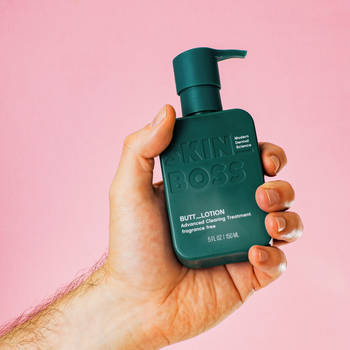
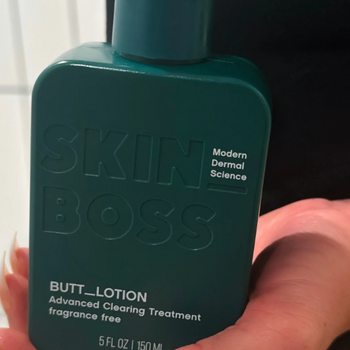
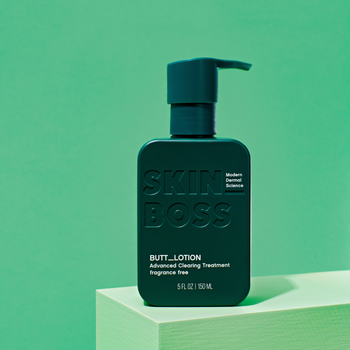
Humidity doesn't mean your body suddenly needs harsher acne products. SKINBOSS pairs THE LUXE LOOP™ for controlled physical exfoliation with THE BUTT ACNE TREATMENT™ with salicylic acid + Lactiv® Complex for leave-on chemical exfoliation, moisturization and barrier support; THE PEACH PATCH™ can protect an appropriate individual bump from picking and friction. Get out of the damp clothes, clear the follicular buildup, keep the barrier intact and let body skin be body skin. Hot people exfoliate. Sweaty people change their leggings.
References
- American Academy of Dermatology Association / Is sports equipment causing your acne? — https://www.aad.org/public/diseases/acne/causes/sports-equipment
- American Academy of Dermatology Association / Acne-like breakouts could be folliculitis — https://www.aad.org/public/diseases/a-z/folliculitis
- American Academy of Dermatology Association / Is your workout causing your acne? — https://www.aad.org/public/diseases/acne/causes/workouts
- American Academy of Dermatology Association / Back acne: How to see clearer skin — https://www.aad.org/public/diseases/acne/diy/back-acne
- American Academy of Dermatology Association / 12 summer skin problems you can prevent — https://www.aad.org/public/everyday-care/skin-care-secrets/routine/prevent-summer-skin-problems
- Mayo Clinic / Folliculitis: Symptoms and causes — https://www.mayoclinic.org/diseases-conditions/folliculitis/symptoms-causes/syc-20361634
- Mayo Clinic / Folliculitis: Diagnosis and treatment — https://www.mayoclinic.org/diseases-conditions/folliculitis/diagnosis-treatment/drc-20361662
SKINBOSS JOURNAL of MODERN DERMAL SCIENCE