Chlorine itself does not usually cause the acne-like bumps people notice after using a hot tub. A sudden crop of itchy or tender bumps appearing about 12–48 hours later may actually be hot-tub folliculitis, a bacterial infection of the hair follicles most often associated with Pseudomonas aeruginosa in inadequately maintained hot-tub water.
And here's the weirdly useful clue: the rash can look worse underneath your swimsuit.
So much for blaming exposed skin.
Does Chlorine in a Hot Tub Cause Acne?
Not usually. Proper chlorine levels are part of what helps prevent hot-tub folliculitis rather than cause it.
The confusion makes sense.
You use a hot tub.
A day later, your chest, back, butt or thighs break out.
Naturally, the chemical in the water gets blamed.
But hot-tub folliculitis is associated with Pseudomonas bacteria that can thrive when the hot tub's disinfectant and pH aren't adequately controlled. Mayo specifically describes this condition in hot tubs, heated pools and water slides where chlorine and pH levels are not correct.
So in the classic scenario, the problem isn't too much effective sanitation.
It's not enough.
What Is Hot-Tub Folliculitis?
Hot-tub folliculitis is a bacterial infection and inflammation of hair follicles that develops after exposure to contaminated warm water.
The bacteria most closely associated with it is Pseudomonas aeruginosa.
Follicles become inflamed and produce small acne-like bumps. Some develop into pustules.
They can itch.
They can feel tender.
And visually, they are very easy to mistake for a sudden body-acne breakout.
But this isn't acne vulgaris.
That's the first thing to get right.
Why Does Hot-Tub Folliculitis Look Like Acne?
Because both conditions involve the follicle.
But the mechanism is different.
Acne vulgaris involves follicular plugging, sebum and inflammation. Hot-tub folliculitis is an infection involving bacteria entering or proliferating within hair follicles.
Same-looking red bump.
Very different event.
This is why treating every pustule on the body as “clogged pores” gets people into trouble.
An exfoliating acid can help keratin buildup.
It does not turn into an antibiotic because the bump looks like acne.
Morphology gives you a clue.
Mechanism determines treatment.
How Long After a Hot Tub Does the Rash Appear?
Usually not the moment you climb out.
Hot-tub folliculitis commonly appears about 12–48 hours after exposure.
AAD describes breakouts appearing in that window, while Mayo describes the characteristic rash appearing about one to two days after exposure.
That delay is diagnostically useful.
Saturday night: hot tub.
Sunday morning: skin seems fine.
Sunday night or Monday: suddenly you're covered in tiny itchy “pimples.”
The timeline makes considerably more sense for folliculitis than for chlorine somehow clogging hundreds of pores instantaneously.
What Does Hot-Tub Folliculitis Look Like?
It usually produces clusters of small round follicular bumps that may itch, burn or become pustular.
The bumps often look surprisingly uniform.
Some stay red.
Some develop a small white center.
You may have dozens rather than one isolated lesion.
And they frequently occur on the trunk, buttocks or thighs.
Mayo notes that the eruption may be particularly prominent where swimsuit fabric held the water against the skin.
That's one of the stranger but more useful clues.
Why Is Hot-Tub Folliculitis Worse Under a Swimsuit?
Because the swimsuit can keep contaminated water in prolonged contact with skin.
Think about what happens when you get out.
Your exposed arms begin drying immediately.
The skin under the swimsuit?
Still warm.
Still wet.
Still covered.
And swimsuit fabric presses that water directly against follicles.
Mayo specifically notes that hot-tub folliculitis tends to be worse where a swimsuit traps water against the skin.
So yes, your bikini can outline the rash.
Very considerate of it diagnostically.
Can You Get Hot-Tub Folliculitis on Your Butt?
Absolutely.
The buttocks are a particularly logical place for hot-tub folliculitis because they're frequently covered by wet swimwear during and after exposure.
The bumps can look exactly like what consumers call butt acne.
But if twenty itchy follicular pustules appeared within two days of using a hot tub, I would not begin by blaming excessive sebum.
Look at the timing.
Look at the distribution.
Look at the hot tub.
Body skincare gets much easier once you stop calling every red follicle acne.
Can You Get Hot-Tub Folliculitis on Your Back and Chest?
Yes.
Folliculitis can occur wherever hair follicles are present.
The trunk is a common area for acne-like follicular eruptions.
If bumps appear across the chest, back, buttocks and thighs shortly after the same hot-tub exposure, that pattern itself is informative.
True acne did not necessarily decide to colonize your entire torso over the weekend.
Can Hot-Tub Folliculitis Be Itchy?
Yes.
Itching is one clue that you're dealing with folliculitis rather than ordinary acne.
Folliculitis can also burn or feel tender.
True acne lesions can certainly hurt, particularly deeper inflammatory ones, but an abrupt crop of itchy, similar-looking follicular bumps should expand your differential.
Especially after a hot tub.
The history matters just as much as the photograph.
How Can You Tell Hot-Tub Folliculitis From Body Acne?
The easiest comparison is timing + itch + lesion uniformity + hot-tub exposure.
| What you notice | More suggestive of |
|---|---|
| Begins 12–48 hours after hot tub | Hot-tub folliculitis |
| Itchy follicular bumps | Folliculitis |
| Worse beneath swimsuit | Hot-tub folliculitis |
| Many similar bumps appearing suddenly | Folliculitis |
| Blackheads | Acne vulgaris |
| Whiteheads mixed with other acne lesions | Acne vulgaris |
| Chronic recurring breakouts unrelated to hot tubs | Another acne/follicular condition |
| Rough permanent goosebump texture | Keratosis pilaris |
One characteristic doesn't diagnose you.
A cluster of them gets much more interesting.
Is Hot-Tub Folliculitis the Same as Fungal Acne?
No.
Both are forms of folliculitis, but the organisms are different.
Hot-tub folliculitis is classically bacterial and associated with Pseudomonas. So-called fungal acne is usually Malassezia folliculitis, which is associated with yeast.
Different organisms.
Different clinical context.
Different treatment.
This is exactly why “folliculitis” is a more useful first category than trying to sort every body bump into acne.
Is Hot-Tub Folliculitis Contagious?
The primary concern is exposure to contaminated water rather than ordinary person-to-person acne transmission.
That does not mean basic hygiene stops mattering.
Don't share damp swimwear.
Wash the suit.
Wash your hands after handling irritated or draining skin.
And don't intentionally reopen lesions.
But the hot tub itself is the key exposure in the classic scenario.
Does Too Much Chlorine Irritate Skin?
Yes, and this is where the chlorine question becomes more nuanced.
Chlorinated water can dry or irritate sensitive skin even when it is not causing bacterial folliculitis.
That's barrier irritation.
Different mechanism.
After prolonged pool or hot-tub exposure, some people notice tightness, itching or general dryness rather than a field of discrete follicular pustules.
AAD recommends rinsing with fresh water after swimming and using gentle cleansing and moisturization when pool exposure leaves skin dry.
So chlorine can irritate.
But irritation and hot-tub folliculitis are not synonyms.
How Can You Tell Chlorine Irritation From Hot-Tub Folliculitis?
Look at whether the reaction is diffuse or follicular.
Chlorine-related irritation may make a broader area of skin feel:
dry,
tight,
itchy,
red,
or stingy.
Hot-tub folliculitis produces distinct bumps centered around hair follicles.
Some become pustules.
And the folliculitis has that delayed 12–48 hour relationship to hot-tub exposure.
One feels more like unhappy skin.
The other looks more like an outbreak of pimples.
Does Hot Water Make Folliculitis More Likely?
Warm water creates a favorable environment for the organism associated with classic hot-tub folliculitis, particularly when the water chemistry is inadequate.
Heat also changes the skin environment.
Warm, wet skin becomes softer.
Prolonged soaking creates occlusion.
Then the swimsuit sits against it.
AAD notes that hair follicles are easier to damage when skin is hot and damp, which can make infection easier once microorganisms gain access.
Hot tubs are basically an unusually specific combination of biology, water chemistry and swimwear.
Does Shaving Before a Hot Tub Increase the Risk of Bumps?
It may increase follicular irritation.
Shaving creates tiny amounts of mechanical stress around hair follicles.
Then you take freshly shaved skin and soak it in very warm communal water.
If your skin is already razor-sensitive or prone to folliculitis, that's not my favorite sequence.
You don't need to fear the hot tub because you shaved your legs.
But if you repeatedly notice problems after shaving + hot-tub exposure, separate the two events and see whether the pattern changes.
Skin histories are useful.
Does Waxing Before a Hot Tub Increase the Risk?
Freshly waxed skin has also experienced follicular trauma.
Hundreds of hairs were just physically removed.
That skin may be red and sensitive before it ever enters the water.
If you wax and immediately spend an evening soaking in a communal hot tub, you're introducing another variable before the follicles have settled.
Give freshly waxed skin some recovery time.
Your vacation itinerary can handle it.
Can Scrubbing Prevent Hot-Tub Folliculitis?
No.
Aggressive scrubbing does not sterilize follicles and may add physical irritation instead.
This is especially important for SKINBOSS's body-care framework.
Physical exfoliation has a legitimate job: removing loosened surface buildup.
It is not disinfection.
A rough scrub used right before or immediately after a hot tub does not protect you from Pseudomonas.
If anything, traumatizing the skin barrier immediately around an infectious exposure is not a brilliant strategy.
Gentle wins here.
Does Salicylic Acid Prevent Hot-Tub Folliculitis?
Salicylic acid is useful for follicular keratin buildup and acne-related congestion, but it should not be positioned as prevention or treatment for bacterial hot-tub folliculitis.
That's an important line.
Salicylic acid exfoliates.
It helps normalize clogged follicles.
Those are useful body-care jobs.
But when Pseudomonas infection is driving the eruption, the fundamental problem is bacterial.
Don't make an exfoliating active do a medical job it wasn't designed to do.
Does Lactic Acid Treat Hot-Tub Folliculitis?
No.
Lactic acid can be useful for rough body texture, KP and keratin buildup.
It is not a substitute for appropriate treatment of an active bacterial folliculitis.
And if the skin is currently inflamed, itchy and covered in pustules, aggressively adding acids may simply create more irritation.
Treat the active problem first.
Return to cosmetic follicular maintenance later.
Timing matters.
Should You Exfoliate While You Have Hot-Tub Folliculitis?
I would not aggressively exfoliate an active follicular eruption.
Inflamed or pustular skin does not need additional physical abrasion.
You also don't need to stack strong chemical exfoliants because the bumps look clogged.
They're not necessarily clogged.
They're inflamed follicles.
Let the eruption settle.
If it is persistent, severe or uncertain, get it evaluated.
Once the skin is fully calm and intact again, you can resume your ordinary body-exfoliation routine.
How Do You Treat Hot-Tub Folliculitis?
Mild hot-tub folliculitis often resolves on its own in otherwise healthy people once the exposure stops.
AAD recommends warm compresses for folliculitis, while Mayo notes that mild cases often resolve with basic self-care. More serious or recurring infections can require medical evaluation and prescription treatment.
Don't pick.
Don't pop.
Don't scrub.
And don't automatically start leftover antibiotics from another illness.
If medication is needed, let a clinician choose it for the actual organism and condition.
How Long Does Hot-Tub Folliculitis Last?
Mild cases can clear relatively quickly after exposure ends.
Mayo notes that mild folliculitis often heals within a few days with basic self-care, although severity varies.
This is another important distinction from chronic acne.
If the rash appeared two days after a hot tub and then disappears over several days, that's a very different trajectory from a three-year history of back acne.
Again: timing is diagnostic information.
Should You Pop Hot-Tub Folliculitis Bumps?
No.
You're dealing with inflamed or infected follicles.
Squeezing adds tissue trauma and gives you another opportunity to spread bacteria across the skin or create post-inflammatory marks.
A pustule is not a tiny storage container your body forgot to empty.
Leave it alone.
Warm compress if appropriate.
Let the skin heal.
Should You Use a Hydrocolloid Patch on Hot-Tub Folliculitis?
Not as blanket treatment for a widespread eruption.
A hydrocolloid patch may physically protect an appropriate superficial individual lesion from touching or friction.
But if you have 40 follicular bumps across the buttocks and back after a hot tub, the answer is not 40 pimple patches.
That's a folliculitis problem.
Treat the condition, not every bump as an isolated facial pimple.
When Should You See a Doctor for Hot-Tub Folliculitis?
Seek medical care if the rash is widespread, increasingly painful, rapidly worsening, persistent, repeatedly recurring or accompanied by fever or other signs that you feel unwell.
Mayo advises medical evaluation for widespread folliculitis or symptoms that persist after self-care, and more urgent evaluation when there are signs of spreading infection such as increasing redness, pain, fever or chills.
Also use a lower threshold if your immune system is compromised.
A dermatologist or other healthcare provider can confirm whether the eruption is actually folliculitis.
How Can You Prevent Hot-Tub Folliculitis?
Start with the water.
Use hot tubs that are properly maintained, and skip one if you're not confident its disinfectant and pH are being controlled appropriately.
AAD specifically recommends avoiding questionable hot tubs for this reason.
Then think about the swimsuit.
Change out of it when you're finished.
Wash it.
Let it dry completely.
And rinse the skin.
There isn't a glamorous treatment serum that beats good water maintenance.
Should You Shower After Using a Hot Tub?
Yes.
Rinse the skin with clean fresh water after you get out.
Use a mild cleanser if appropriate.
Then dry the skin and change into clean clothing.
This helps remove residual hot-tub water from the skin and also addresses the separate problem of chemical residue irritating sensitive skin.
You spent an hour marinating.
Rinse.
Should You Change Out of Your Swimsuit Immediately?
Once you're finished soaking, yes.
Don't let the wet swimsuit hold hot-tub water against the same body skin for another two hours.
This is particularly relevant because swimsuit-covered areas can develop more pronounced hot-tub folliculitis.
Bring dry underwear.
Bring shorts.
Your follicular prevention kit officially costs about zero dollars.
Should You Wash a Swimsuit After a Hot Tub?
Yes.
AAD recommends washing bathing suits and wetsuits after each use and allowing them to dry completely before wearing them again to reduce bacterial exposure associated with folliculitis.
Do not leave the wet swimsuit balled up in a plastic bag overnight and consider it ready for round two.
That is not laundering.
Does a Strong Chlorine Smell Mean a Hot Tub Is Safe?
Don't use smell as your water-quality laboratory.
Proper hot-tub sanitation depends on actual disinfectant concentration and pH, not whether the water smells “chlorine-y” enough.
If you're at a commercial facility and concerned, ask about maintenance.
If the water looks cloudy, the facility seems poorly maintained or you're simply unsure?
Skipping one soak is an extremely inexpensive dermatology intervention.
Can You Test a Home Hot Tub Before Using It?
If you own the hot tub, maintaining the disinfectant and pH according to the manufacturer's and public-health guidance is part of owning it.
Test strips and appropriate water-maintenance systems exist for exactly this reason.
Don't rely on the water looking clean.
Microorganisms are famously poor at respecting aesthetics.
Clear water is not a microbiology report.
Why Doesn't Face-Acne Logic Work for Hot-Tub Bumps?
Because this isn't a sebum problem.
That sentence is the entire SKINBOSS body-skin philosophy under a microscope.
An acne-like bump appears.
People reach for an oil-stripping facial cleanser.
But hot-tub folliculitis is bacterial inflammation of the follicle.
Drying the surrounding skin doesn't correct the water exposure.
It doesn't rebalance the hot tub.
It doesn't turn salicylic acid into an antibiotic.
Treat what the bump is.
Not what it resembles.
Why Does Barrier Support Matter After Hot-Tub Exposure?
Because hot water and pool chemicals can leave skin dry and irritated even when infection isn't present.
That means you can have two things happening simultaneously:
a follicular eruption,
and surrounding skin that feels dry after soaking.
Once active infection is not a concern, gentle moisturization helps restore comfort and barrier function.
The goal isn't to strip every trace of oil because bumps appeared.
Body skin still needs an intact stratum corneum.
When Can You Resume Your Normal Exfoliating Routine?
Once the active eruption is gone and the skin is intact, calm and no longer pustular or tender.
Then ordinary follicular maintenance becomes relevant again.
Physical exfoliation can clear loosened surface buildup.
Chemical exfoliation can manage keratin accumulation.
Moisturization supports the barrier.
That's the normal body-care framework.
An active bacterial rash temporarily takes priority.
Good skincare includes knowing when not to exfoliate.
THE SKINBOSS PERSPECTIVE
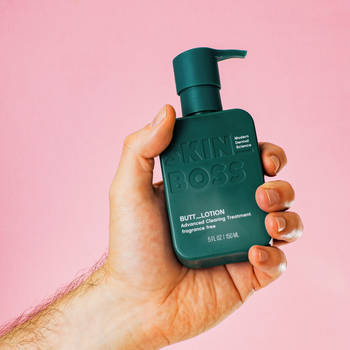
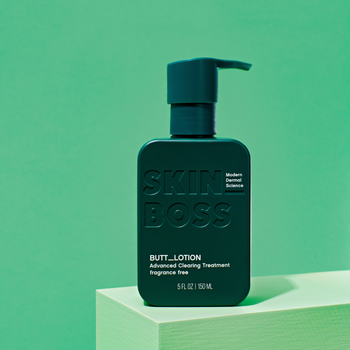
Hot-tub folliculitis is a perfect example of why every body bump shouldn't be treated like facial acne. If you have an active suspected bacterial folliculitis, THE LUXE LOOP™ and THE BUTT ACNE TREATMENT™ are not substitutes for appropriate medical care; once the skin is clear and intact again, THE LUXE LOOP™ and THE BUTT ACNE TREATMENT™ with salicylic acid + Lactiv® Complex can return to their actual jobs: gentle physical + chemical exfoliation and barrier-supportive follicular maintenance. The smartest fix starts before the product anyway: properly maintained water, a clean dry swimsuit and getting out of the wet bikini when the soak is over.
References
- American Academy of Dermatology Association / Acne-like breakouts could be folliculitis AAD folliculitis guidance
- American Academy of Dermatology Association / 12 summer skin problems you can prevent AAD summer skin guidance
- Mayo Clinic / Folliculitis: Symptoms and causes Mayo Clinic folliculitis guidance
- Mayo Clinic / Hot tub folliculitis Mayo Clinic hot-tub folliculitis image and description
SKINBOSS JOURNAL of MODERN DERMAL SCIENCE