The best time to apply most leave-on body-acne treatments is after cleansing, once the skin is dry, at a time when the product can remain on the skin rather than immediately being sweated, showered or rubbed off. For many people, that makes after an evening shower convenient, but consistency and correct use matter more than whether the clock says 8 a.m. or 8 p.m.
There isn't a special nighttime window when salicylic acid suddenly discovers your follicles.
Good skincare is chemistry, biology and adherence. Not astrology.
Is It Better to Apply Body Acne Treatment in the Morning or at Night?
Neither morning nor night is universally better for body acne. The best timing depends on the active ingredient, product directions, your shower schedule and what will happen to the treated skin afterward.
Night has practical advantages.
You may have just showered.
You're less likely to work out immediately afterward.
A leave-on lotion can remain against the skin instead of being washed away an hour later.
But if you shower every morning and consistently apply treatment afterward, morning can work perfectly well for many products.
The bottle directions outrank generic internet advice.
Why Is After a Shower a Good Time to Apply Body Acne Treatment?
Because you've removed sweat, debris and whatever was sitting on the skin during the day.
But there's an important distinction:
clean skin is useful; aggressively stripped skin is not.
Body-acne treatment does not require a squeaky surface.
Use a gentle cleanser. Rinse thoroughly. Pat the skin dry.
Then apply the treatment according to its directions.
AAD specifically recommends gentle cleansing for acne-prone skin and warns that abrasive scrubbing can irritate skin and worsen breakouts.
Your pre-treatment shower should not be the most aggressive part of the routine.
Should Body Acne Treatment Go on Wet or Dry Skin?
For many leave-on acne medications, clean, dry skin is the safest default unless the product specifically tells you otherwise.
Water changes how products spread.
Freshly showered skin can also be more reactive, particularly after hot water, shaving or physical exfoliation.
And certain treatment directions specifically call for drying the skin before application. OTC adapalene labeling, for example, directs users to gently clean and pat dry before applying a thin layer.
Read the actual label.
“Apply after showering” does not automatically mean “apply while dripping wet.”
How Long Should You Wait After Showering Before Applying Body Acne Treatment?
You don't need to stand naked in the bathroom with a stopwatch.
Wait until the skin is comfortably dry and no longer hot or flushed from the shower.
For most people, toweling off, getting ready and then applying the treatment is enough.
If an acid routinely stings when applied immediately after showering, give the skin more time to dry and cool.
Also reconsider the shower itself.
Scalding water followed immediately by exfoliating acids is a fairly efficient way to make a perfectly reasonable formula feel unnecessarily aggressive.
Should You Apply Body Acne Treatment Before Bed?
Bedtime is an excellent option for many leave-on treatments because it is easy to build into a repeatable routine.
Shower.
Dry.
Treat.
Sleep.
AAD specifically recommends applying adapalene for back acne after showering or before going to bed and emphasizes daily use.
But that doesn't establish a universal rule that all body-acne ingredients are more effective at night.
Bedtime works because it's practical.
That's enough reason.
Does Body Acne Treatment Work Better While You Sleep?
Not simply because you're asleep.
A leave-on product works while it remains in contact with the skin according to its formulation and mechanism.
Sleep does offer one obvious advantage: you're usually not swimming, showering or doing burpees.
So a nighttime application may get several relatively undisturbed hours on the skin.
That's a routine advantage, not evidence of a special nocturnal follicle cycle that every topical acne product requires.
Should You Apply Body Acne Treatment in the Morning?
You can if the product directions permit it.
Morning treatment makes particular sense if you shower in the morning and can give the product time to absorb before dressing.
Let a leave-on lotion settle before pulling tight clothing directly over it.
And if the treated skin will be exposed outdoors, follow any sun precautions associated with your particular active.
Timing is not just when do I have five minutes?
It's what happens to this skin during the next few hours?
Should You Apply Body Acne Treatment Before or After Working Out?
Usually after.
Applying a leave-on treatment immediately before a sweaty workout is often poor routine design because sweat, friction and a post-workout shower may remove or redistribute the product soon afterward.
Exercise first.
Then get out of sweaty clothing.
Shower.
Dry the skin.
Apply your treatment.
AAD recommends showering and changing clothes as soon as possible after sweating for people prone to back acne.
That sequence makes far more sense than applying an expensive leave-on treatment and washing it down the drain 45 minutes later.
What If You Can't Shower Right After Working Out?
Change out of sweaty clothing as soon as you reasonably can.
AAD suggests an oil-free cleansing wipe when immediate showering isn't possible for people with back acne.
Then do your normal cleansing and treatment routine when you get home.
You don't need to panic because your post-workout shower was delayed by an hour.
Body skin responds to patterns.
Not one imperfect Tuesday.
Should You Reapply Body Acne Treatment After Sweating?
Not automatically.
Follow the specific product directions.
More applications do not necessarily mean faster clearing, and excessive use can increase dryness and irritation.
FDA's OTC acne monograph specifically instructs consumers to begin certain topical acne treatments once daily because excessive drying can occur, increasing frequency only if needed and tolerated. It also directs users to reduce frequency if bothersome dryness or peeling develops.
That's a useful principle beyond the label itself:
dose for efficacy and tolerability, not anxiety.
Is Twice a Day Better Than Once a Day?
Only if the particular treatment is intended for twice-daily use and your skin tolerates it.
Frequency is ingredient- and formula-dependent.
One product may be designed for once-daily application.
Another may permit one to three applications.
A cleanser has completely different contact time from a leave-on lotion.
So “twice daily is stronger” is not a useful universal rule.
FDA acne labeling explicitly recognizes this by telling consumers to adjust frequency downward when dryness or peeling occurs.
More treatment on an irritated barrier can become less productive, not more.
Should You Apply Salicylic Acid in the Morning or at Night?
Salicylic acid does not inherently need to be reserved for nighttime.
What matters is the product directions, concentration, vehicle, frequency and tolerability.
Salicylic acid is a keratolytic beta hydroxy acid. Its useful job in follicular skin is helping loosen accumulated keratin and unclog follicular material.
It doesn't check the sunset time before doing that.
For a leave-on body formula, choose a consistent application window when the product can remain on clean, dry skin.
Is Salicylic Acid Better After a Shower?
After cleansing is a logical time to use it, provided the skin is dry and comfortable.
And here's where body formulation matters.
A salicylic-acid face toner and a moisturizing salicylic-acid body lotion are not interchangeable just because the Drug Facts or INCI list contains the same hero ingredient.
Vehicle matters.
Humectants matter.
Emollients matter.
The finished formula determines how an active reaches the skin and how the surrounding barrier tolerates repeated use.
Ingredient percentage alone does not tell the entire story.
When Should You Apply Lactic Acid Body Lotion?
A lactic-acid body lotion fits particularly well after bathing, once the skin is dry.
Lactic acid is an alpha hydroxy acid that helps loosen compacted keratin. In a well-designed body lotion, that chemical exfoliation can happen inside a moisturizing vehicle rather than as a separate stripping step.
For rough follicular skin and KP, that's a very sensible combination.
Exfoliate the excess keratin.
Support the surrounding barrier.
Repeat consistently.
No need for an acid ambush at 11:47 p.m.
Should You Apply Body Acne Treatment Before or After Moisturizer?
It depends on the formulation.
If your acne treatment is itself a moisturizing lotion, you may not need a separate moisturizer over it.
If you're using a more drying medication plus a separate moisturizer, follow the medication directions and use the moisturizer in a way your skin tolerates.
The bigger point is that moisturization does not sabotage body-acne treatment.
Dryness and barrier irritation are not measures of treatment success.
AAD explicitly warns against drying acne-prone skin because irritation can worsen breakouts.
Can You Use a Chemical Exfoliant and Moisturizer at the Same Time?
Absolutely.
In fact, for body skin I often prefer that formulation architecture.
A leave-on lotion can combine chemical exfoliation with humectants and emollients in the same application.
That matters because many of the bumps people call body acne are not driven primarily by excess sebum.
KP is a keratinization disorder.
Some butt bumps are folliculitis.
Friction can produce acne mechanica.
The body doesn't automatically need to be degreased because it has bumps.
Sometimes it needs better keratin management inside a healthier barrier.
Should Physical Exfoliation Come Before Chemical Exfoliation?
If you're using both, gentle physical exfoliation belongs during cleansing, followed by chemical exfoliation after the skin is clean and dry.
The two methods perform different jobs.
Physical exfoliation removes loosened surface material through contact.
Chemical exfoliation uses ingredients such as salicylic or lactic acid to loosen keratin through chemical activity.
But “physical” does not mean scrub until pink.
AAD consistently advises against aggressive scrubbing of acne-prone skin because irritation can worsen breakouts.
Light contact.
Then let chemistry do its part.
Should You Exfoliate Every Time You Apply Body Acne Treatment?
Not necessarily.
Your chemical treatment may already be exfoliating.
If you're also using a physical exfoliant, frequency should reflect what your skin tolerates.
The goal is not to maximize the number of exfoliation events in a 24-hour period.
The goal is to manage keratin buildup consistently without damaging the barrier.
There is a difference.
Your skin will usually explain it to you with burning and redness if you forget.
Should You Apply Body Acne Treatment Before Getting Dressed?
Yes, but give a leave-on product a moment to settle first.
You don't need to wander around naked for half an hour.
Just avoid applying a wet layer of lotion and immediately compressing it beneath very tight leggings or underwear.
That can make the application feel messier and may increase friction.
Apply a thin, even layer.
Let the formula settle.
Then get dressed.
This is one reason nighttime routines are convenient.
Fewer wardrobe negotiations.
Should You Apply Body Acne Treatment Before Sitting for Hours?
If the product has absorbed, sitting doesn't make it stop working.
But prolonged pressure and friction can contribute to follicular irritation on the buttocks.
So if your routine is aimed at recurring butt bumps, don't focus so narrowly on treatment timing that you ignore eight hours in sweaty compression leggings at a desk.
The formula matters.
The environment around the follicle matters too.
Should You Apply Body Acne Treatment After Shaving?
Be cautious.
Freshly shaved skin can be more reactive because shaving creates mechanical stress at the surface and around follicles.
If your treatment stings after shaving, separate the steps.
Shave on one day or at one time.
Apply stronger exfoliating treatment later, once the skin feels calm.
There is no prize for fitting every body-care intervention into the same shower.
Should You Apply Treatment Before or After a Hydrocolloid Patch?
For an individual lesion, the patch usually needs clean, dry skin to adhere properly.
Avoid putting lotion directly underneath the adhesive area unless the patch directions specifically allow it.
Treat the surrounding field of bump-prone skin according to your normal routine.
Use the patch for the individual appropriate lesion.
Field treatment and spot protection are two different jobs.
Does Applying Acne Treatment at the Same Time Every Day Matter?
The exact minute does not.
The habit does.
If tying treatment to an existing behavior makes you more consistent, use that.
After your evening shower.
After your morning shower.
After the gym.
Before pajamas.
Humans are better at routines when one action cues the next.
And topical treatment only works when it leaves the bottle.
What Happens If You Miss a Night?
Nothing dramatic.
Resume your normal schedule according to the product directions.
Do not double the amount the next day because you feel guilty.
Skin doesn't keep attendance records.
Consistency over weeks matters much more than perfect compliance every 24 hours.
This is particularly relevant because acne treatments take time. AAD notes that acne improvement often requires several weeks of consistent treatment rather than constant product switching.
How Long Should You Leave Body Acne Treatment On?
If it's a leave-on product, leave it on according to the directions.
If it's a wash, follow the labeled contact instructions and rinse it off.
Do not assume leaving a rinse-off product on for 30 minutes makes it “stronger.”
Formulas are developed for a particular use pattern.
Changing that pattern changes exposure.
Skincare experimentation is fun until you're experimentally treating contact dermatitis.
How Long Does Body Acne Treatment Take to Work?
Expect weeks, not overnight transformation.
AAD notes that acne treatment can require several weeks before improvement becomes visible, with back-acne treatment often showing results in about six to eight weeks.
For recurring superficial body bumps, look for the trend:
fewer new lesions,
smoother follicular texture,
less inflammation,
less picking.
Don't evaluate a treatment by what one bump did overnight.
Does Morning Versus Night Matter More for Prescription Treatments?
It can.
Some prescription medications have specific once-daily timing or application instructions.
Adapalene, for example, is labeled for once-daily use, and AAD suggests after showering or before bedtime for back acne.
Other medications have their own directions.
This is where generic “always apply acne treatment at night” advice becomes particularly unhelpful.
If you're using a prescription, follow the prescription.
Your dermatologist gets veto power over a blog post.
What If Your Body Acne Treatment Makes Your Skin Dry?
Reduce the assault, not the commitment.
FDA's OTC acne directions explicitly tell users to reduce application frequency when bothersome dryness or peeling occurs.
And don't respond to dryness by scrubbing the flakes off.
That's how a manageable treatment side effect becomes a barrier problem.
Moisturize.
Reduce frequency if appropriate.
Use gentler cleansing.
Then reassess.
Treatment you can tolerate for six weeks beats treatment you can tolerate for four days.
Why Does Barrier Support Matter for Body Acne?
Because body “acne” is not always a sebum problem.
This is the conceptual mistake behind a lot of bad body-acne routines.
The buttocks and thighs can develop folliculitis, KP, ingrown hairs and friction-related bumps. Keratin accumulation can be a major part of the picture.
Stripping away surface oil does not automatically normalize keratinization.
And if you damage the surrounding barrier while trying, you create dryness and inflammation on top of the original follicular problem.
Treat the follicle.
Respect the barrier.
Those are compatible goals.
What's the Best Body-Acne Schedule if You Shower at Night?
A simple schedule works:
Shower → gentle physical exfoliation if tolerated → dry completely → leave-on chemical treatment → let it absorb → pajamas.
That's it.
You do not need a seven-step butt routine.
If you're treating an individual superficial bump with a hydrocolloid patch, apply it to clean, dry skin according to its directions.
The power of this schedule isn't nighttime.
It's repeatability.
What's the Best Body-Acne Schedule if You Shower in the Morning?
Use the same logic.
Shower → gentle physical exfoliation if appropriate → dry → chemical treatment → let it settle → dress.
If the treated skin will be exposed to the sun, follow the sun precautions for your particular treatment and use appropriate sunscreen.
If you work out later, you may prefer moving your treatment to the post-workout shower instead.
Again, optimize the routine around your life.
Not somebody else's bathroom schedule.
What's the Best Time to Treat Post-Workout Body Acne?
After the workout and after cleansing.
This is the clearest timing recommendation in the entire article.
Sweat plus tight clothing plus friction can aggravate body breakouts, and AAD recommends showering and changing out of sweaty clothing promptly.
So if your back, butt or thighs break out after exercise:
work out,
get out of damp clothes,
cleanse,
dry,
then treat.
Don't exfoliate your leggings.
Exfoliate your skin after they're off.
What Is the Best Time of Day to Apply Body Acne Treatment?
The best time is after cleansing, on dry skin, when the treatment can remain undisturbed and when you can repeat the routine consistently.
For many people, that's after an evening shower.
For athletes, it may be after the day's workout.
For morning shower people, morning is completely reasonable for products whose directions allow it.
The clock is the least interesting variable.
Correct product.
Correct frequency.
Clean, dry skin.
Consistent use.
That's the routine.
THE SKINBOSS PERSPECTIVE
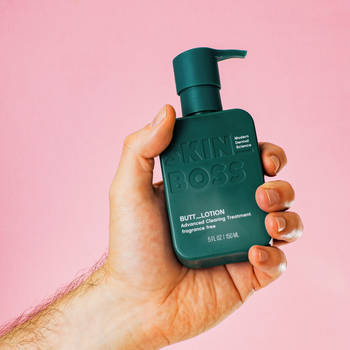
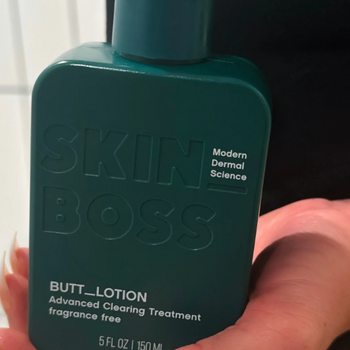
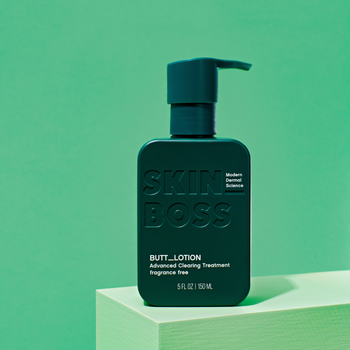
SKINBOSS doesn't care whether you're a 7 a.m. or 10 p.m. exfoliator. Use THE LUXE LOOP™ as your physical exfoliant in the shower, then apply THE BUTT ACNE TREATMENT™ with salicylic acid + Lactiv® Complex to dry skin as your leave-on chemical exfoliant and barrier-supportive moisturizer; THE PEACH PATCH™ can protect an appropriate individual bump on clean, dry skin. The best schedule is the one that keeps physical exfoliation gentle, gives the leave-on treatment time on the skin and becomes automatic enough that you actually stick with it.
References
- American Academy of Dermatology Association / Acne: Tips for managing — AAD acne management guidance
- American Academy of Dermatology Association / Back acne: How to see clearer skin — AAD back acne guidance
- American Academy of Dermatology Association / 10 skin care habits that can worsen acne — AAD acne skin-care guidance
- American Academy of Dermatology Association / Is sports equipment causing your acne? — AAD acne mechanica guidance
- U.S. Food and Drug Administration / OTC Monograph M006: Topical Acne Drug Products — FDA topical acne monograph
- U.S. Food and Drug Administration / Differin Gel (adapalene) label — FDA adapalene label
SKINBOSS JOURNAL of MODERN DERMAL SCIENCE