The best body-acne routine for frequent travelers is a deliberately boring one: cleanse gently, exfoliate consistently, moisturize the barrier and change out of sweaty or travel-worn clothing as soon as practical. Travel tends to worsen body breakouts not because airplanes mysteriously cause acne, but because your skin suddenly gets different weather, more sitting, more friction, unfamiliar products and a routine that stops happening on schedule.
The smartest travel skincare rule is simple.
Bring fewer products.
Change fewer variables.
Use them consistently.
Why Does My Body Break Out Every Time I Travel?
Travel changes the environment around your skin faster than your routine usually adapts.
Consider one travel day.
You shower at 4:30 a.m.
Sit in leggings for the drive to the airport.
Sit again at the gate.
Sit for a six-hour flight.
Carry a backpack across your shoulders.
Arrive somewhere 20 degrees warmer.
Then wear the same clothes to dinner because the room isn't ready.
That is a very different follicular environment from an ordinary Tuesday at home.
Pressure, occlusion and repeated clothing contact can aggravate acne-prone skin and folliculitis-prone follicles. AAD specifically describes acne mechanica as acne triggered when clothing or equipment traps heat and sweat while rubbing the skin.
Travel isn't the diagnosis.
It stacks the triggers.
Does Flying Cause Body Acne?
Flying itself does not directly cause body acne.
The travel behaviors around flying can.
Long periods of sitting increase pressure and clothing contact across the buttocks and posterior thighs.
Backpacks and shoulder bags rub the upper back and shoulders.
Warm terminals followed by cold cabins change how much you sweat.
And you may stay in the same outfit for 12 hours or more.
For acne mechanica and friction-prone follicular skin, that combination matters.
The airplane is mostly guilty of keeping you in one position while wearing clothes.
Why Does My Butt Break Out After Long Flights?
A long flight creates prolonged pressure across exactly the body area people already describe as “butt acne.”
But remember what that term contains.
Butt bumps can represent KP.
Folliculitis.
Ingrown hairs.
Friction-related irritation.
Occasionally true acne.
So sitting for nine hours does not necessarily make your sebaceous glands produce a special aviation pimple.
Pressure, heat and fabric friction can irritate a follicular surface that was already susceptible.
If your bumps reliably flare after travel days, your airport outfit belongs in the investigation.
Can Tight Travel Clothes Cause Butt and Thigh Breakouts?
They can aggravate them.
Tight leggings are comfortable for travel for a reason: they stay put.
Unfortunately, they also stay against the same skin for hours.
AAD notes that tight clothing can rub and damage follicles, particularly when skin is hot and damp, increasing the risk of folliculitis.
A two-hour flight?
Probably not a dermatologic crisis.
A 14-hour travel day in sweaty compression leggings followed by a two-hour rental-car drive?
Your follicles may submit feedback.
Loose, breathable clothing is an easy variable to test.
Does Sitting for Hours Clog Butt Pores?
Not literally.
Pressure and occlusion are not the same thing as a keratin-sebum plug forming inside an acne follicle.
But sitting can aggravate existing follicular skin through pressure and friction.
This distinction matters.
If your butt bumps are KP, you're dealing primarily with abnormal follicular keratinization.
If they're folliculitis, inflammation of the follicle is central.
If they're acne mechanica, repeated pressure and rubbing can contribute directly to flaring.
None of those mechanisms is improved simply by trying to “dry out the pore.”
Why Does My Back Break Out From Carrying a Backpack?
Because backpack straps are classic friction zones.
AAD specifically lists backpacks among the items that can trigger acne mechanica when they repeatedly rub acne-prone skin.
Look at your breakout map.
Are the bumps concentrated exactly beneath the straps?
Across the upper shoulders?
Where the bottom edge of the pack touches your lower back?
That's useful.
You may not need a stronger acne treatment.
You may need a better-fitting backpack or a soft clothing layer between the strap and your skin.
Sometimes textile engineering beats another serum.
Does Airplane Air Dry Out Body Skin?
It can.
AAD's travel skincare guidance specifically notes that airplanes and different climates can make skin drier and recommends continuing moisturization while traveling.
That matters even if you are acne-prone.
Dry skin is not automatically clear skin.
If you're using salicylic acid, AHAs, retinoids or benzoyl peroxide, your skin may already be balancing treatment against barrier dryness.
Then you fly.
Then you take a hot hotel shower.
Then you skip moisturizer because you're worried about “clogging pores.”
Now your body skin is both breakout-prone and irritated.
Lovely.
Does Dry Air Make KP Worse While Traveling?
Yes, it can make KP more noticeable.
KP-prone skin tends to look and feel rougher when the stratum corneum becomes dry.
A flight from humid Miami to Denver in January can therefore change the texture of your arms, thighs and buttocks even if the underlying follicular tendency has not fundamentally changed.
This is why travelers with KP often think they are suddenly “breaking out.”
Sometimes the skin simply lost water.
The follicular plugs gained contrast.
Barrier support matters.
Can Changing Climates Cause Body Breakouts?
Climate changes can alter several things simultaneously:
how much you sweat,
how quickly sweat evaporates,
how occlusive your clothing feels,
how dry the barrier becomes,
and what product texture feels comfortable.
A rich body cream that feels perfect at home in Chicago in January may feel suffocating during a humid trip to Miami.
A lightweight lotion that works beautifully in summer may suddenly feel inadequate in a dry mountain climate.
That doesn't mean your skin type changed at baggage claim.
The environment did.
Should You Change Your Entire Skincare Routine for a Different Climate?
Usually, no.
This is where frequent travelers create unnecessary chaos.
They arrive somewhere humid and immediately buy a clarifying shower gel.
Then an oil-free gel.
Then a new sunscreen.
Then the bumps appear.
Which product caused what?
No idea.
AAD specifically recommends bringing your usual skincare while traveling because unfamiliar hotel products, particularly fragranced ones, may irritate sensitive skin.
Keep the core routine stable.
Adjust texture or frequency only when your skin actually asks for it.
Should You Use Hotel Body Wash If You're Acne-Prone?
You can if you know your skin tolerates it.
But for sensitive or treatment-exposed body skin, I prefer bringing a familiar cleanser.
Hotel toiletries are selected for hospitality.
Not your follicular history.
Fragrance is common.
The surfactant system may be stronger than what you normally use.
And if the skin suddenly becomes itchy, tight or red, you've now added another unknown variable.
AAD specifically recommends travelers with sensitive skin bring their own products rather than relying on hotel toiletries.
This is one travel toiletry worth packing.
Does Fragrance in Hotel Products Cause Body Acne?
Not necessarily.
Fragrance is more relevant to irritation or contact sensitivity than pore clogging.
That distinction matters.
If your skin becomes diffusely red, itchy or burning after the hotel body lotion, I would think irritation before “acne.”
An eruption of follicular pustules is another pattern.
Don't make every reaction a clogged-pore story.
Your skin has more than one way to complain.
Can Hotel Sheets Cause Body Acne?
Usually not in the simplistic “dirty sheets cause acne” way people imagine.
Your body does spend hours pressed against bedding, so friction and occlusion can matter.
But reputable hotels clean linens.
A sudden itchy reaction across exposed skin may also point toward irritation, insect bites or another condition entirely.
If you wake up with acne-like bumps after one night, don't automatically diagnose bacterial acne from the sheets.
Acne lesions generally have more biological history than one pillowcase.
Can Travel Laundry Detergent Cause Body Bumps?
Laundry products can cause irritation in susceptible skin.
If you use a hotel laundry service, a vacation rental's detergent or a friend's heavily fragranced dryer sheets, your skin may encounter something new.
Diffuse itch or redness under clothing is more suggestive of irritation than classic acne.
For frequent travelers with sensitive skin, packing a few detergent sheets or small portions of a familiar fragrance-free detergent can eliminate another variable.
Not glamorous.
Very practical.
Should You Bring Your Full Body-Acne Routine When You Travel?
Usually not.
Bring the core functions, not the entire bathroom.
You need:
gentle cleansing,
physical exfoliation if it's part of your established routine,
leave-on chemical treatment,
and barrier support.
If one product combines chemical exfoliation and moisturization, even better.
Travel routines fail because they become too complicated to reproduce in a hotel bathroom at 11:30 p.m.
Your follicles prefer consistency to impressive packing.
What Body-Acne Products Are Actually Worth Packing?
Prioritize products that prevent the routine from collapsing.
A cleanser you already tolerate.
Your regular leave-on treatment.
A moisturizer if the treatment does not provide enough barrier support.
A gentle physical exfoliant if that is part of your established routine.
Individual spot protection if you tend to pick.
That's enough for most trips.
You are going away for five days.
Your skin does not need a sabbatical research laboratory.
Can You Decant Body-Acne Products for Travel?
Some products are reasonable to decant, while others are better left in their original packaging.
Cosmetic formulas can be sensitive to light, air, contamination and packaging compatibility.
Medication labeling also matters.
If a product contains an OTC acne drug, keeping it in properly labeled packaging is the cleaner approach, especially if you need directions or ingredient information.
And do not pour six different white lotions into identical unlabeled travel jars unless you enjoy dermatologic roulette.
Label everything.
Future-you will be grateful.
Can I Skip My Body Treatment for a Few Days on Vacation?
Of course.
Your skin will survive.
But if travel repeatedly causes flares, routine interruption may be part of the pattern.
KP and recurring follicular congestion respond better to consistency than episodic treatment.
One skipped night is irrelevant.
Stopping exfoliation for ten days, spending those ten days in swimsuits and sunscreen, then attacking the returning texture with an aggressive scrub on Sunday?
That's less ideal.
Maintenance should look boring.
That's why it works.
Should You Apply Body-Acne Treatment Before a Flight?
You can, but think about what happens afterward.
If you're applying a leave-on body treatment and then immediately putting on tight travel clothing for ten hours, that may not be the most comfortable application window.
For many people, the better routine is:
shower the night before,
treat normally,
travel,
then cleanse and reapply after arriving.
The exact clock is less important than clean skin, appropriate use and consistent contact time.
Should You Apply Body-Acne Treatment After a Flight?
Often, yes.
A post-travel shower is a practical reset.
You've been sitting.
Sweating.
Handling luggage.
Changing climates.
Maybe wearing the same clothes since dawn.
Cleanse gently.
Let the skin dry.
Then resume your normal leave-on treatment.
No detox mask required.
Airports are stressful enough.
Should You Shower Immediately After Checking Into the Hotel?
If you've had a long sweaty travel day, it's useful.
Especially if you're prone to back, butt or thigh breakouts.
AAD recommends showering and changing clothes after sweating rather than allowing damp clothing to remain against acne-prone skin.
But use warm water.
A gentle cleanser.
No furious post-airport scrub.
The travel day already provided enough friction.
What If I Can't Shower After Traveling?
Change your clothes.
This may be the highest-value fallback.
Get out of the damp or compression-heavy travel outfit.
Put on clean, loose clothing.
If necessary, gently wipe breakout-prone areas with a familiar non-irritating cleansing product.
AAD similarly recommends changing out of sweaty clothing when immediate showering isn't possible.
Perfect hygiene is not required.
Reducing prolonged occlusion helps.
Does Traveling in Leggings Make Butt Acne Worse?
It can if you are prone to friction-related follicular bumps.
Leggings combine:
close fabric contact,
pressure,
heat retention,
and prolonged sitting.
None of those guarantees acne.
But if the same pattern happens every flight, try another outfit.
Loose joggers.
Breathable trousers.
Seamless underwear.
The cost of the experiment is very low.
Much lower than replacing your entire skincare routine.
Should You Wear Cotton Underwear While Traveling?
Fabric choice is personal.
Cotton can feel breathable and comfortable for everyday wear.
Technical moisture-managing fabrics may perform better if you sweat heavily.
The real goal is dry, comfortable skin with minimal friction.
Avoid obsessing over one fiber as universally superior.
A perfectly breathable fabric that cuts into the groin for eight hours still fails the assignment.
Fit matters.
What About Compression Garments on Long Flights?
Compression socks have a legitimate travel purpose for some travelers.
Full-body compression clothing is a separate question.
If tight shapewear or compression shorts reliably aggravate follicular skin on the buttocks or thighs, consider whether you actually need them for the trip.
Medical compression prescribed for a health reason outranks skincare convenience.
Follow your clinician's advice.
For optional fashion compression?
Your follicles get a vote.
Can Travel Stress Cause Body Acne?
Stress can influence acne biology in some people.
But I would not jump to stress before investigating the much more concrete travel changes.
Did you sleep poorly?
Maybe.
Did you also wear the same tight pants for 13 hours, skip showering, use an unfamiliar body wash and spend three days in a swimsuit?
The tangible variables deserve attention first.
“Stress caused my acne” is often an explanation that arrives before the laundry has been interrogated.
Does Lack of Sleep Cause Travel Breakouts?
Poor sleep can affect inflammatory and hormonal physiology, but it's difficult to isolate from all the other changes that accompany travel.
One bad night does not guarantee body acne.
Repeated sleep disruption may contribute to skin looking and behaving less predictably.
Still, if your breakouts map exactly beneath backpack straps, I would address the backpack before buying melatonin for your follicles.
Hierarchy matters.
Can Airport Food Cause Body Acne?
Diet and acne are complicated.
Certain dietary patterns may influence acne in some individuals, particularly true acne vulgaris.
But one airport sandwich is unlikely to explain an abrupt crop of butt folliculitis.
This matters because travel invites over-analysis.
You ate differently.
You broke out.
Therefore, food caused it.
Maybe.
But if the bumps are on the buttocks after 12 hours of sitting and sweating, the mechanical explanation deserves equal billing.
Don't create a restrictive vacation diet because of one breakout.
Why Does My Skin Break Out at Beach Resorts?
Beach travel stacks a spectacular number of follicular variables.
Sunscreen.
Salt water.
Heat.
Sweat.
Swimsuits.
Hair removal.
Wet fabric.
Pool chemicals.
More showering.
Then you sit in damp swimwear at lunch.
If the buttocks or thighs break out, don't automatically blame the sunscreen.
Look at the entire system.
One vacation day can contain more follicular exposures than an ordinary week at home.
Should You Change Out of Wet Swimwear?
Yes.
Once you're done swimming, changing into dry clothing is a simple way to reduce prolonged moisture and friction against the buttocks and thighs.
This is especially relevant for folliculitis-prone skin.
Wet swimwear is not inherently toxic.
It is simply wet fabric pressed against follicles for a long time.
Sometimes skin science really is that unglamorous.
Can Hot Tubs Cause Breakouts While Traveling?
Yes, but this may be hot-tub folliculitis, not acne.
Hot, inadequately maintained water can lead to Pseudomonas folliculitis, producing an acne-like eruption that often appears under swimsuit-covered areas.
If dozens of itchy pustules suddenly appear after a hotel hot tub, stop thinking clogged pores.
An active infectious folliculitis is not the moment for aggressive physical or chemical exfoliation.
If the eruption is severe, persistent or accompanied by systemic symptoms, seek medical care.
Does Hotel Gym Sweat Cause Body Acne?
Exercise is not the problem.
Remaining in damp clothing afterward can be.
AAD recommends clean workout clothes, gentle sweat removal and showering after exercise for acne-prone skin.
Pack one extra workout outfit.
Use it.
Wash it.
This sounds obvious until your three-day business trip contains one sports bra.
Reuse of damp athletic clothing creates an avoidable variable.
Should You Wipe Down Hotel Gym Equipment?
Yes, for general hygiene.
Shared equipment sees a lot of skin contact.
But don't let surface anxiety distract you from the more common issue:
your own sweat-soaked clothing staying against the skin for the next two hours.
Wipe down the bench.
Then go shower.
The second step probably matters more to your back.
Is Travel a Good Time to Try a New Acne Product?
Usually, no.
I strongly dislike launching a new exfoliating routine halfway across the country.
If the product irritates you, you're now managing that irritation in an unfamiliar environment.
If you break out, you cannot tell whether it was:
the climate,
the hotel lotion,
the sunscreen,
the new active,
or the 11-hour flight.
Test new products before the trip.
Travel with formulas you already know.
Boring wins again.
Should You Use Stronger Exfoliation While Traveling?
No.
Travel is often when your barrier is already dealing with:
climate changes,
more showers,
sun exposure,
pool water,
friction,
and inconsistent sleep.
That is not my favorite moment to increase acid intensity.
Maintain the routine.
Don't compensate for travel by escalating it.
You cannot exfoliate your way out of poor logistics.
Why Is Physical Exfoliation Useful During Travel?
Gentle physical exfoliation helps clear loose surface buildup that can become more noticeable when climate, sunscreen use and routine changes alter the skin surface.
But physical exfoliation should remain controlled.
A hotel washcloth is not automatically a skincare tool.
Neither is the rough complimentary loofah hanging in the resort shower.
AAD warns that aggressive scrubbing can worsen acne-prone skin.
Bring the method you already trust.
Why Is Chemical Exfoliation Useful for Travelers?
A leave-on chemical exfoliant keeps working on follicular keratin buildup without requiring an elaborate shower ritual.
That portability matters.
Salicylic acid can help manage clogged follicles.
AHAs can help rough keratinized texture.
And when a chemical exfoliant is formulated inside a moisturizing body lotion, one product can replace two travel steps.
That's good formulation.
Not simply good packing.
Is Salicylic Acid Good for Travel-Related Body Breakouts?
It can be when follicular congestion or acne mechanica is part of the issue.
AAD specifically recommends salicylic acid as one OTC option for acne mechanica because it helps unclog pores.
But salicylic acid does not solve every travel bump.
Hot-tub folliculitis?
Different problem.
Contact dermatitis from hotel lotion?
Different problem.
Deep painful lesion?
Different problem.
Ingredient choice follows diagnosis.
Even on vacation.
Is Lactic Acid Good for Travel Body Skin?
Lactic acid makes particular sense when travel leaves body skin both rough and dry.
As an AHA, it helps loosen keratinized surface buildup.
In a lotion vehicle, it can also be paired with humectants and emollients that support hydration.
That becomes valuable after flights, dry climates, pools and repeated showering.
Exfoliate.
Moisturize.
One application.
Your carry-on approves.
Should You Moisturize More on Flights?
If your skin feels dry, yes.
AAD specifically recommends moisturizing during travel because airplane cabins and changing climates can dry the skin.
That doesn't mean applying the heaviest possible cream before boarding.
Use a formula appropriate for the area and your skin.
If butt or back skin is acne-prone, choose something you know it tolerates.
Barrier support is not the same thing as occluding the skin indiscriminately.
Can Heavy Moisturizer Cause Travel Breakouts?
A rich, highly occlusive product may feel less comfortable in a hot humid destination or beneath tight travel clothing.
That does not make moisturizer itself bad for acne.
Adjust the vehicle.
Maybe your winter cream becomes a lotion.
Maybe the lotion becomes a gel-lotion.
Formulators have more than one texture for a reason.
Climate changes the preferred sensorial profile even when the biological need for hydration remains.
Should You Pack Benzoyl Peroxide for Travel?
If it is already part of a successful true-acne routine, continue using it according to directions.
Travel is not a reason to stop an established acne medication.
It also is not a reason to begin benzoyl peroxide simply because you fear a breakout.
It can be drying and irritating.
And it can bleach fabrics.
Hotel towels have enough problems without your help.
Can Benzoyl Peroxide Bleach Hotel Towels and Sheets?
Yes.
Benzoyl peroxide can bleach colored textiles.
If you use it while traveling, let the product dry fully and be mindful of colored towels, clothing and bedding.
This is not a dermatology emergency.
It's a housekeeping diplomacy issue.
White sleepwear is suddenly very sophisticated.
How Should You Handle Prescription Acne Treatment While Traveling?
Keep using it as prescribed unless your clinician has told you otherwise.
Keep medication in appropriately labeled packaging.
Plan for storage requirements.
And pack enough for the full trip plus a small buffer if reasonable.
If you're flying internationally, medication rules can vary by destination.
Check those requirements before departure rather than improvising at customs.
Prescription adherence matters more than maintaining a perfect cosmetic routine.
Can Sunscreen Make Travel Body Acne Worse?
A sunscreen that doesn't suit your skin can feel heavy or contribute to breakouts for some people.
That is not a reason to skip sun protection.
AAD's travel guidance recommends broad-spectrum, water-resistant SPF 30 or higher on exposed skin and regular reapplication.
If you're body-acne prone, choose a sunscreen that works with your skin and climate.
Then remove it gently at the end of the day.
No double-scrub required.
Should You Exfoliate After a Beach Day?
Only if the skin is calm.
If you're sunburned, irritated or freshly shaved, skip it.
If the skin feels normal, return to your usual routine.
Do not look at three layers of sunscreen and think:
“I need to scrub this off until I squeak.”
A good cleanser is capable of doing its job without epidermal renovation.
What Is the Best Routine for a Long-Haul Flight Day?
Keep it extremely simple.
Before traveling:
shower,
use your normal treatment,
wear clean comfortable clothing.
During travel:
avoid unnecessary rubbing,
change out of sweaty layers if needed,
stay consistent with medication.
After arrival:
shower when practical,
change into clean clothes,
resume your leave-on treatment and moisturizer.
That's it.
No airborne facial mist needs to reach your butt every 45 minutes.
What Should You Do on a Road Trip?
Road trips produce similar issues.
Long sitting.
Heated seats.
Tight clothing.
Limited shower access.
Plus drive-through sunscreen application if your thighs or shoulders are exposed.
At stops, move around.
Change damp clothing if necessary.
Keep your routine at the hotel.
You don't need to perform skincare in a gas-station bathroom because you've been sitting for two hours.
The goal is sensible friction management.
Not follicular paranoia.
How Do You Handle Body Acne While Camping?
Camping removes the guaranteed shower.
So prioritize what matters most.
Clean clothing.
Basic hygiene.
Gentle cleansing when possible.
Avoiding hours in saturated clothes.
Continue your leave-on routine when the skin is reasonably clean and dry.
If you're hiking, backpack friction may become particularly relevant.
AAD specifically identifies backpack straps as a possible acne-mechanica trigger.
Adjust the pack before blaming the wilderness.
What About Business Travel When You Have No Time?
This is exactly why the routine should be short.
You do not need a twelve-step body ritual after a client dinner.
A good travel system might take three minutes.
Shower.
Gentle physical exfoliation if appropriate.
Dry.
Apply leave-on treatment.
Done.
The more steps you require, the more likely your routine becomes theoretical.
What If Your Body Breaks Out During the Trip Anyway?
Don't panic and overhaul everything.
First ask:
Where are the bumps?
What do they look like?
What changed?
Are they under backpack straps?
Under swimsuit fabric?
Where you shaved?
Rough and uniform like KP?
Sudden and itchy like folliculitis?
Then make one or two logical corrections.
Change the friction.
Stop the new hotel lotion.
Get out of wet clothing.
Return to your usual routine.
Troubleshooting works better than punishment.
Should You Pop a Travel Pimple?
No.
Travel already increases opportunities for rubbing, pigment changes and irritation.
Picking adds trauma.
Then the lesion spends the rest of the day beneath clothing.
Not a great healing environment.
If you tend to pick because a bump is accessible, physically covering an appropriate superficial lesion can be useful.
The fingernails are not a treatment modality.
How Quickly Should Travel-Related Breakouts Clear?
It depends on what the breakout actually is.
Acne mechanica may improve once friction and occlusion are reduced and appropriate acne care resumes. AAD recommends dermatologic evaluation if acne mechanica remains after 6–8 weeks of treatment.
Folliculitis may follow a different course.
KP is ongoing management.
Irritant dermatitis may settle once the offending product is removed.
“Travel acne” does not have one clock because it is not one disease.
When Should You See a Dermatologist While Traveling?
Seek medical care if a body eruption is:
rapidly spreading,
very painful,
associated with fever,
significantly draining,
forming deep nodules,
or behaving like an infection.
Also get evaluated if recurring breakouts remain unexplained after you return to your normal routine.
A three-month cycle of blaming airplanes is less useful than one accurate diagnosis.
And if you develop a severe allergic reaction, widespread blistering or trouble breathing, seek urgent medical care.
What's the Best Travel Routine for Body Acne?
Keep your home routine intact while reducing the travel triggers that surround it.
Use your familiar cleanser.
Use gentle physical exfoliation rather than harsh hotel scrubs.
Follow with a leave-on chemical exfoliant suited to your follicular condition.
Support the barrier.
Change out of sweaty or wet clothing.
Avoid unnecessary friction.
Do not launch new actives because you crossed a time zone.
The goal is not perfect skin in every climate.
It's a routine stable enough that your follicles barely notice you left home.
THE SKINBOSS PERSPECTIVE
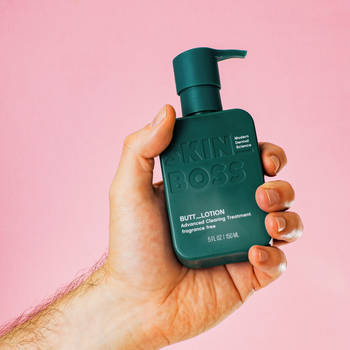
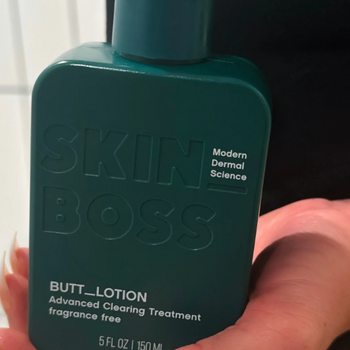
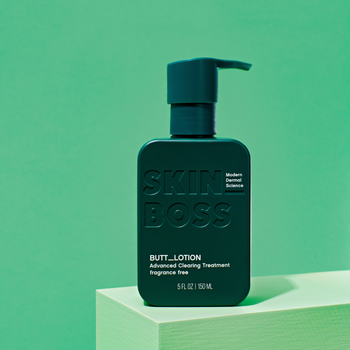
The best travel routine is the one small enough to make the trip. THE LUXE LOOP™ keeps the physical exfoliation step controlled and portable, followed by THE BUTT ACNE TREATMENT™ with salicylic acid + Lactiv® Complex for leave-on chemical exfoliation, moisturization and barrier support; THE PEACH PATCH™ can protect an appropriate individual bump from picking and travel-day friction. Don't replace your entire routine with hotel toiletries or try to dry out a breakout because you changed climates. Keep the follicle clear, keep the barrier supported, and let the destination be the exciting part.
References
- American Academy of Dermatology Association / 7 Travel Skin Care Tips From Dermatologists — https://www.aad.org/public/everyday-care/skin-care-secrets/prevent-skin-problems/travel-skin-care-tips
- American Academy of Dermatology Association / Is Sports Equipment Causing Your Acne? — https://www.aad.org/public/diseases/acne/causes/sports-equipment
- American Academy of Dermatology Association / Acne-Like Breakouts Could Be Folliculitis — https://www.aad.org/public/diseases/a-z/folliculitis
- American Academy of Dermatology Association / Back Acne: How to See Clearer Skin — https://www.aad.org/public/diseases/acne/diy/back-acne
- American Academy of Dermatology Association / Is Your Workout Causing Your Acne? — https://www.aad.org/public/diseases/acne/causes/workouts
- American Academy of Dermatology Association / 10 Skin Care Habits That Can Worsen Acne — https://www.aad.org/public/diseases/acne/skin-care/habits-stop
SKINBOSS JOURNAL of MODERN DERMAL SCIENCE