Most butt breakouts need at least 4–8 weeks of consistent treatment before you can fairly judge whether a routine is working. More complete clearing can take 3–4 months when the bumps are true acne, while folliculitis may resolve faster and keratosis pilaris usually requires ongoing management.
That's the useful answer.
The less satisfying answer? Your timeline depends on what you're actually calling “buttne.”
How Long Does Butt Acne Usually Take to Clear?
If the bumps are true acne, expect improvement rather than perfection during the first 4–8 weeks. More complete clearing may take several months.
Dermatologists use this kind of timeline for a reason. Acne treatment works partly by preventing lesions that haven't appeared yet, not simply making today's visible pimple disappear.
The American Academy of Dermatology advises giving acne treatment about 6–8 weeks before deciding whether it is working. For truncal acne, which includes body areas such as the back, the AAD notes that complete clearing can take 3–4 months.
So if you're on day nine and still have bumps, your treatment hasn't necessarily failed.
Skin doesn't work on Amazon Prime.
Why Does Buttne Take Weeks to Improve?
Because you're treating a follicular process.
A bump becomes visible after changes have already been happening inside or around the follicle.
Keratinized cells can accumulate around the follicular opening. In true acne, abnormal follicular keratinization combines with sebum and inflammation. With KP, keratin forms a plug around the follicle. Folliculitis involves inflammation of the follicle and may have infectious or noninfectious causes.
A good routine isn't merely flattening today's bump.
It's trying to improve what happens to the next follicle.
That takes repeated treatment.
Is Buttne Actually Acne?
Not necessarily.
This is the distinction that changes the entire timeline.
“Buttne” or “butt acne” is a convenient name for several different kinds of follicular bumps on the buttocks.
True acne can occur there.
But folliculitis can look remarkably similar. So can keratosis pilaris and ingrown hairs.
If you treat KP like acne for three months and wonder why it keeps returning, the problem may not be that your treatment isn't strong enough.
You may be treating the wrong condition.
How Long Does Folliculitis on the Butt Take to Clear?
Mild folliculitis can sometimes resolve relatively quickly once the trigger is removed, but persistent or recurrent folliculitis needs proper diagnosis.
Folliculitis can be triggered by shaving, waxing, tight clothing and other forms of follicular damage or occlusion. AAD notes that acne-like folliculitis can clear on its own in otherwise healthy people when the cause is removed.
That's a fundamentally different timeline from chronic acne treatment.
But here's the catch: folliculitis isn't one disease with one cause.
Bacterial folliculitis and fungal folliculitis aren't interchangeable. Neither is the same as simple friction-related inflammation.
If a widespread follicular eruption keeps returning, don't spend six months rotating through stronger exfoliants.
Get the diagnosis right.
How Long Does Keratosis Pilaris on the Butt Take to Clear?
KP changes the answer completely.
Keratosis pilaris is a chronic tendency toward keratin plugging the hair follicle, so it is better thought of as something you manage than something you permanently clear.
Mayo Clinic describes KP as keratin forming plugs that block follicular openings. Moisturizers and topical exfoliants such as lactic acid and salicylic acid can improve its appearance, but stopping treatment can allow it to return.
That is why a “30-day KP cure” isn't a particularly credible promise.
You may see smoother skin.
You may see fewer visible bumps.
But maintenance matters.
If your buttne is predominantly KP, your correct results timeframe is ongoing management, not a countdown to permanent eradication.
Can Buttne Start Looking Better Before It Completely Clears?
Yes.
And this is something people miss when they evaluate a product.
Improvement and complete clearing aren't the same endpoint.
You may first notice:
- fewer new inflamed bumps
- existing bumps becoming flatter
- less redness
- smoother overall texture
- fewer angry follicles after workouts or shaving
AAD notes that acne medication may produce fewer breakouts within about 4–8 weeks, while clearing can take considerably longer.
That's why progress photos can be surprisingly useful.
Memory is terrible at skin.
Take a photo on day one in ordinary bathroom lighting. Take another at four weeks in roughly the same position and lighting.
Then compare.
Why Isn't My Butt Acne Clearing After Two Weeks?
Because two weeks is usually too early to evaluate a follicular treatment routine.
Changing products every week or two can actually make it harder to determine what works and can increase irritation.
AAD recommends giving an acne treatment 6–8 weeks to show improvement rather than constantly replacing products.
This is one of the most common skincare mistakes I see conceptually: treatment impatience becomes treatment escalation.
More acid.
More scrubbing.
Another cleanser.
Another serum.
Now you have the original bumps plus an irritated barrier.
Consistency is less exciting. It also works better.
Why Isn't My Butt Acne Clearing After Eight Weeks?
Eight weeks is different.
If you've used an appropriate routine consistently for 6–8 weeks and see absolutely no improvement, reassess what you're treating.
AAD recommends seeking dermatologic help when acne isn't improving within that general window.
Ask a few uncomfortable but useful questions.
Are these actually pimples?
Do they itch?
Are they all centered around follicles?
Do they appear after shaving?
Are they rough and uniform rather than inflamed?
Are there deep painful nodules?
Diagnosis becomes more important as treatment failure continues.
Don't automatically conclude that you need something harsher.
Can Over-Exfoliating Make Butt Acne Take Longer to Clear?
Absolutely.
Over-exfoliation can damage the skin barrier, increase irritation and make already inflamed follicular skin look considerably worse.
The instinct makes sense.
There are bumps.
Exfoliation helps bumps.
Therefore, more exfoliation must help more.
No.
Physical and chemical exfoliation are tools, not competitive sports.
A physical exfoliant should remove loosened surface buildup through controlled contact.
A chemical exfoliant helps loosen compacted cells through ingredients such as AHAs or salicylic acid.
Neither should leave your butt feeling raw.
Does Scrubbing Butt Acne Make It Clear Faster?
No.
Aggressive scrubbing can create more friction over skin that's already inflamed.
And this is where body acne routines often go sideways.
Someone sees texture and decides to sand it off.
You cannot scrub a plugged follicle into submission.
Controlled physical exfoliation can help manage surface buildup. That's different from using a rough washcloth or gritty scrub until the skin turns pink.
If your exfoliation routine creates lingering redness or stinging, that's not evidence that it's “working.”
That's irritation.
Does Salicylic Acid Make Butt Acne Clear Faster?
Salicylic acid can help manage follicular congestion because it promotes exfoliation and helps unclog pores, but it still needs consistent use rather than one-off spot treatment.
AAD identifies salicylic acid as an ingredient that helps unclog pores.
For body skin, I prefer thinking about this as follicular maintenance.
You're not waiting for one bump, attacking it and then stopping.
You're treating the bump-prone area so fewer follicles progress to visible inflammation.
That distinction matters.
Does Lactic Acid Help Buttne?
Lactic acid is particularly useful when roughness and keratin buildup are part of the picture.
As an alpha hydroxy acid, lactic acid helps loosen accumulated surface cells while also fitting naturally into moisturizing body formulations.
Mayo Clinic specifically includes lactic acid among topical exfoliants used to loosen dead skin cells in keratosis pilaris.
That dual exfoliation-plus-moisturization logic matters on the buttocks.
Because again, this isn't automatically oily facial acne.
Drying everything out isn't the goal.
Improving follicular shedding while maintaining a functional barrier is.
Why Does Moisturizing Help Buttne Clear?
Because a damaged barrier doesn't make exfoliation more effective.
It makes skin more reactive.
Moisturization helps maintain water in the stratum corneum and improves the flexibility and integrity of the skin surrounding the follicle.
That matters when you're using exfoliating ingredients regularly.
The old acne mentality was often: oil is bad, dry is good.
That's already an oversimplification for facial acne.
For KP and many acne-like butt bumps, it makes even less sense.
AAD even notes that moisturizer can be an important part of an acne treatment plan when treatment causes dryness.
Treat.
Moisturize.
You are allowed to do both.
Why Do New Butt Pimples Keep Appearing While Old Ones Heal?
Because visible bumps represent different follicles at different stages.
This is why spot treatment alone can become an endless game of whack-a-mole.
One bump flattens.
Another appears two inches away.
Then another.
Area treatment makes more sense for recurrent follicular congestion because you're treating acne-prone or bump-prone skin before every lesion becomes visible.
AAD recommends applying acne medication across acne-prone skin rather than only to visible blemishes for exactly this preventive reason.
The same logic is useful when thinking about recurring body breakouts.
Don't only chase what you can see today.
How Much Faster Will Buttne Clear If You Exfoliate Every Day?
There isn't a legitimate formula that says daily exfoliation clears buttne X percent faster.
Skin doesn't give bonus points for frequency.
The correct exfoliation frequency is the amount your skin can tolerate consistently without barrier damage.
Some body skin tolerates daily chemical exfoliation beautifully.
Other skin needs less frequent treatment.
And active inflamed lesions may need gentler handling than surrounding bump-prone skin.
If increasing frequency produces burning, peeling or persistent redness, you didn't accelerate the process.
You interrupted it.
Can Picking Make Buttne Take Longer to Clear?
Yes.
Picking introduces additional tissue trauma and inflammation.
AAD specifically warns that picking and popping can make acne take longer to clear and increase the risk of scars and post-inflammatory hyperpigmentation.
This matters enormously on the buttocks because friction doesn't stop after you pick.
You put clothes back on.
You sit.
You walk.
You sleep on the area.
Then the mark left behind can last longer than the original bump.
A three-day pimple can become a three-month reminder.
How Long Do Dark Marks From Buttne Take to Fade?
Usually longer than the bump itself.
Post-inflammatory hyperpigmentation is pigment left behind after inflammation resolves, and its fading timeline is separate from the timeline for clearing active bumps.
This distinction is crucial when judging progress.
You can have no active breakout and still look in the mirror and think your buttne hasn't improved because old brown, red or purple marks remain.
Look closely.
Flat discoloration is not the same thing as an active raised lesion.
If new bumps have stopped but old marks remain, your treatment may actually be working very well.
Now you're dealing with the aftermath.
What Results Should You Expect After Four Weeks?
At four weeks, look for direction rather than perfection.
You may notice fewer new inflamed bumps.
Texture may feel smoother.
Individual lesions may resolve more quickly.
Your skin may tolerate clothing or workouts better.
But if you're expecting completely clear skin at day 28, you're setting an unnecessarily aggressive benchmark.
AAD's acne guidance puts noticeable improvement in roughly the 4–8 week range.
Four weeks is your first useful checkpoint.
Not necessarily the finish line.
What Results Should You Expect After Eight Weeks?
By 6–8 weeks, a routine that's appropriately matched to true acne should usually be giving you enough information to judge whether it's helping.
That doesn't mean every mark is gone.
It means the trajectory should be better.
Fewer new lesions.
Less inflammation.
More time between breakouts.
If absolutely nothing has changed, revisit the diagnosis, routine and triggers.
This is the point where “just be patient” stops being sufficient advice.
How Long Should You Keep Treating Buttne After It Clears?
If you're prone to recurring follicular congestion, don't treat clear skin as permission to abandon everything that got it there.
Maintenance matters.
Acne treatment often needs to continue after clearing to help prevent new breakouts, and KP inherently requires ongoing management.
You may eventually reduce treatment frequency.
But returning immediately to the exact routine and triggers that preceded the bumps isn't a particularly convincing experiment.
Clear skin is the maintenance phase.
Not graduation.
When Should You See a Dermatologist Instead of Waiting Longer?
See a dermatologist when bumps are deep, painful, scarring, draining, spreading or repeatedly returning despite a sensible routine.
Also get evaluated if you suspect infection or if your “butt acne” looks increasingly unlike acne.
AAD specifically notes that folliculitis and other conditions can be mistaken for acne.
And this is the point worth remembering:
A treatment that fails for eight weeks doesn't always need to become stronger. Sometimes the diagnosis needs to become better.
THE SKINBOSS PERSPECTIVE
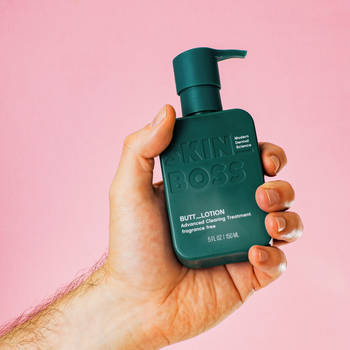
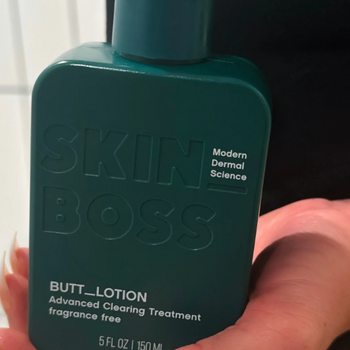
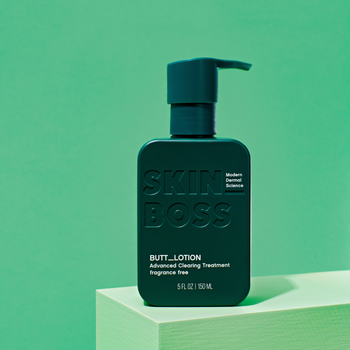
We'd judge a buttne routine in weeks, not days. THE LUXE LOOP™ provides controlled physical exfoliation first, followed by THE BUTT ACNE TREATMENT™ with salicylic acid + Lactiv® Complex for chemical exfoliation, moisturization and barrier support; THE PEACH PATCH™ can protect an appropriate individual bump while it settles. The goal isn't to strip body skin into submission. It's to keep the follicular environment consistently clear enough that fewer bumps form in the first place.
References
- American Academy of Dermatology Association / Acne: Overview
- American Academy of Dermatology Association / Acne: Diagnosis and Treatment
- American Academy of Dermatology Association / Adult Acne Treatment Dermatologists Recommend
- American Academy of Dermatology Association / Back Acne: How to See Clearer Skin
- American Academy of Dermatology Association / 10 Skin Care Habits That Can Worsen Acne
- American Academy of Dermatology Association / Moisturizer: Why You May Need It If You Have Acne
- American Academy of Dermatology Association / Acne-Like Breakouts Could Be Folliculitis
- Mayo Clinic / Keratosis Pilaris: Symptoms and Causes
- Mayo Clinic / Keratosis Pilaris: Diagnosis and Treatment
SKINBOSS JOURNAL of MODERN DERMAL SCIENCE