Butt acne in teenagers needs a little more diagnostic discipline than adult “buttne” because puberty makes true acne more likely, while KP, folliculitis, ingrown hairs and sports-related friction are also extremely common during the same years. Treatment should match the actual bump, not simply use the strongest facial acne products on the buttocks.
That matters because adolescent skin already has plenty going on.
It does not need an unnecessary chemical assault because somebody saw a red dot.
Is Butt Acne Common in Teenagers?
Acne itself is extremely common in adolescence.
AAD reports that acne affects about 85% of adolescents, with symptoms often beginning during puberty.
That makes true acne more plausible in a teen than in someone whose face has never produced a comedone in their life.
But location still matters.
Face, chest and back are classic acne sites because they contain abundant sebaceous glands.
The buttocks can develop true acne, including severe acne in some cases, but they are also a common location for other follicular conditions. AAD notes that severe acne can sometimes involve the buttocks.
So “teen + butt bumps” does not automatically equal hormonal acne.
It means acne belongs on the list.
Why Does Acne Start During the Teenage Years?
Puberty changes sebaceous biology.
Androgens increase during puberty, stimulating enlargement of sebaceous glands and increasing oil production. That additional sebum can contribute to pore blockage and acne formation.
This is where teen treatment differs from a lot of adult butt-acne advice.
For a teenager with obvious blackheads, whiteheads, inflamed facial acne and similar lesions across the back or buttocks, classic acne biology may be genuinely relevant.
Sebum is not imaginary here.
But don't let that fact erase every other body mechanism.
A rough field of tiny thigh and butt bumps is still much more suggestive of KP than a sudden outbreak of acne vulgaris.
Is Teen Butt Acne Usually Hormonal?
Not necessarily.
Hormones make acne more common in adolescence, but they do not explain every follicular bump on the buttocks.
A teen may have:
true acne,
KP,
bacterial folliculitis,
friction-induced folliculitis,
ingrown hairs,
or acne mechanica from sports clothing.
And sometimes more than one.
That's why I would never look at a teenager's butt bumps and say “puberty” before looking at the lesion pattern.
Hormones are context.
Not diagnosis.
How Can You Tell True Teen Acne From KP?
The easiest clues are texture and lesion type.
True acne often includes blackheads, whiteheads and inflamed pimples of different sizes.
KP usually produces dozens or hundreds of small, fairly uniform rough follicular bumps.
AAD notes that KP is especially common in children and teenagers and can flare around puberty. In teens and adults, the buttocks are one of its recognized sites.
So a 15-year-old with rough upper arms, rough thighs and the same exact texture on the buttocks?
KP deserves serious consideration.
A 15-year-old with forehead comedones, back acne and mixed inflamed lesions on the buttocks?
Different picture.
Why Is KP So Common in Teenagers?
KP frequently begins early in life or becomes more noticeable during adolescence.
AAD notes that hormonal changes around puberty can trigger a KP flare and that children and teenagers are among the groups most likely to have the condition.
This is especially important because KP can be mistaken for acne right when actual acne is also appearing.
Excellent timing, biologically.
The teen sees bumps.
The parent sees acne.
Someone buys a drying facial wash.
Now the KP is drier and rougher.
The face wash has technically done something.
Just not something useful.
What Does KP on a Teen’s Butt Look Like?
KP tends to create small, uniform bumps with an overall rough texture.
Often the bumps are easier to feel than to diagnose from across the bathroom.
They may be:
skin-colored,
red,
brown,
or darker than the surrounding skin.
AAD specifically identifies the buttocks as a common KP site in teenagers and adults.
If the entire area feels like goosebumps even where nothing looks inflamed, that is a strong clue.
Acne does not usually turn the entire buttock into sandpaper.
What Is Folliculitis in Teenagers?
Folliculitis is inflammation or infection of a hair follicle, and it can look almost exactly like an acne breakout.
AAD notes that folliculitis may appear suddenly, can itch or hurt, and commonly follows follicular damage from shaving, waxing, tight clothing or improperly maintained hot tubs.
Teenagers encounter plenty of those triggers.
Sports uniforms.
Compression shorts.
Dancewear.
Shaving.
Wet swimsuits.
Hours in leggings.
This is why the location and history matter so much.
How Can You Tell Folliculitis From Teen Acne?
Look for uniformity, itch and timing.
Folliculitis bumps often sit directly around individual hairs.
They can appear fairly suddenly.
They may itch.
True acne is more likely to include a mixture of blackheads, whiteheads and inflammatory lesions.
AAD explicitly warns that folliculitis can be mistaken for acne.
If the diagnosis is uncertain, a dermatologist can sort it out much faster than six months of rotating body washes.
Do Sports Cause Butt Acne in Teens?
Sports can absolutely aggravate acne-prone and folliculitis-prone body skin.
But playing volleyball does not biologically manufacture acne.
Heat, trapped sweat, pressure and repeated rubbing can create acne mechanica or irritate hair follicles.
AAD describes acne mechanica as acne caused when sports clothing or equipment traps heat and sweat while repeatedly rubbing the skin.
Think compression shorts.
Dance tights.
Football padding.
Bike shorts.
A teen can be doing everything “hygienically right” and still have one seam repeatedly aggravating the same follicular field.
Are Tight Leggings Bad for Teen Butt Acne?
They can aggravate the problem.
AAD notes that tight clothing can damage follicles and contribute to folliculitis, particularly when skin is hot and damp.
That does not mean teenagers need to live in parachute pants.
It means observe the pattern.
Do the bumps flare under dance tights?
After long practices?
Along the exact edge of compression shorts?
That is useful information.
The answer may involve changing fabric or fit alongside treatment.
Skincare cannot negotiate with a seam rubbing the same follicle 4,000 times.
Does Sweat Cause Teen Butt Acne?
Sweat itself is not dirt and does not need to be scrubbed out of the skin.
The problem is prolonged dampness plus friction and occlusion.
Once practice ends, change out of sweaty clothing.
Shower when reasonably practical.
Use a gentle cleanser.
Done.
Teenagers do not need to become afraid of sweating.
That is an unfortunate hobby to develop at 14.
Should Teens Shower Immediately After Sports?
Soon afterward is useful, especially if they are prone to body acne or folliculitis.
The bigger priority is not remaining in saturated sports clothing for hours.
Change.
Shower.
Use clean clothes.
And do not turn the post-practice shower into a daily exfoliation boot camp.
The skin has already spent two hours under friction.
Can Shaving Cause Butt Bumps in Teenagers?
Absolutely.
Shaving can irritate follicles and contribute to ingrown hairs or folliculitis.
AAD specifically identifies shaving, plucking and waxing as common follicular-damage triggers.
This is especially relevant when teenagers first begin hair removal.
Technique is inconsistent.
Pressure is too hard.
The same dull razor lives in the shower for three months.
Then the resulting bumps get called acne.
Sometimes the acne treatment is the second mistake.
Are Ingrown Hairs the Same as Butt Acne?
No.
An ingrown hair occurs when a cut or regrowing hair becomes trapped beneath or re-enters the skin.
It can become red and inflamed.
It can certainly look like a pimple.
But the mechanical hair problem remains part of the cause.
If bumps consistently appear after shaving or waxing, improve the hair-removal technique before escalating acne actives.
The razor may be contributing more than the hormones.
Should Teen Butt Acne Be Treated Like Face Acne?
Sometimes.
If the lesions are true acne vulgaris, established acne actives such as benzoyl peroxide, salicylic acid and topical retinoids may be appropriate. Current AAD acne guidelines recommend benzoyl peroxide, topical retinoids and salicylic acid among evidence-based acne therapies.
But that does not mean the entire facial routine should migrate south.
Body skin has different friction.
Different occlusion.
Different surface area.
And the buttocks have a higher chance of presenting with KP or folliculitis instead of classic acne.
Treat the diagnosis.
Not the product category.
Is Salicylic Acid Good for Teen Butt Acne?
Yes, when follicular congestion or true acne is part of the problem.
AAD describes salicylic acid as an acne treatment that opens clogged pores and exfoliates the skin.
It can also be useful for keratinized body texture.
That makes salicylic acid particularly interesting in the butt-and-thigh area because the same ingredient may be helpful across different follicular buildup problems.
But it still is not an antibiotic.
And it does not make every pustule acne.
Is Benzoyl Peroxide Good for Teen Butt Acne?
It can be excellent for true inflammatory acne.
AAD strongly recommends topical benzoyl peroxide in its updated acne guidelines because of its effectiveness against acne-associated bacteria and inflammatory lesions.
But again, match it to the problem.
KP is not a bacterial acne condition.
Malassezia folliculitis is not treated with benzoyl peroxide as its primary therapy.
An ingrown hair still has a hair involved.
A teenager does not need every acne ingredient because puberty happened.
Can Teens Use Retinoids for Body Acne?
Yes, when appropriate.
Topical retinoids are core evidence-based acne treatments, and current AAD acne guidelines cover management of acne in adults, adolescents and children older than nine.
Retinoids help normalize follicular cell turnover and reduce plugging.
But they can also cause dryness and irritation.
For buttock skin already irritated by sports, shaving or friction, that needs to be considered.
Prescription treatment belongs with clinician guidance.
Especially for younger teens.
Why Is Moisturizer Important for Teen Butt Acne?
Because acne treatment should not destroy the surrounding barrier.
Teen skin may produce more sebum during puberty.
That does not mean every square inch of teen skin is over-oily.
Buttocks and thighs can still become dry.
KP-prone skin is often dry.
Acne actives can make skin dry.
Sports and showering can irritate it.
So moisturizer remains relevant.
The goal is a functional stratum corneum around a better-behaved follicle.
Not the driest teenager in school.
Does Moisturizer Make Teen Butt Acne Worse?
Not automatically.
A product that is poorly tolerated can aggravate breakouts, but moisturization itself does not cause acne by definition.
For true acne-prone skin, non-comedogenic products are a sensible choice.
For KP, moisturization is particularly important because dryness makes rough follicular texture more obvious.
Skipping lotion because “acne needs to dry out” is exactly how body skin gets mistreated.
Should Teens Use Body Scrubs on Butt Acne?
No aggressive scrubs.
That is one of the easiest mistakes to avoid.
Rough granular scrubs and hard washcloth use can create additional friction and irritation over follicles already stressed by sports clothing, shaving or active inflammation.
Controlled physical exfoliation is different.
It should help remove loosened surface buildup without leaving the skin red or sore.
The goal is not to polish puberty off.
Can Teens Exfoliate Every Day?
Some gentle exfoliating routines can be used daily if the specific product or method is intended for daily use and the skin tolerates it.
But daily does not mean hard.
A teenager with sensitive skin should not be stacking:
physical scrub,
salicylic wash,
acid toner,
benzoyl peroxide,
and retinoid
because TikTok produced a shopping list.
That's how an acne routine becomes dermatitis.
Start simpler.
Is Physical or Chemical Exfoliation Better for Teen Butt Bumps?
They have different jobs.
A physical exfoliant removes loosened buildup from the skin surface through controlled contact.
A chemical exfoliant such as salicylic acid or an AHA loosens keratin through chemical activity.
For rough KP-prone body skin, using both gently can make sense.
For inflamed infectious folliculitis, aggressive exfoliation is not the treatment.
Again, diagnosis first.
Why Is Barrier Damage a Bigger Problem Than Teens Think?
Because irritation can make skin look more “broken out.”
Now there is redness between the bumps.
Stinging.
Peeling.
Then the teen sees more texture and reaches for more acne treatment.
You can see where this ends.
A damaged barrier also makes everyday friction from underwear, sportswear and sitting more noticeable.
Effective skincare should become quieter over time.
Not progressively louder.
What If a Teen’s Butt Acne Hurts?
Deep, painful nodules deserve medical attention.
AAD notes that severe acne can produce deep painful cysts and nodules and may occur on the buttocks. Severe acne is also more likely to scar.
Do not ask a teenager to “just wait it out” if they're developing deep painful lesions.
Treating acne early can reduce the likelihood of worsening and scarring.
Pain is information.
Use it.
What If Teen Butt Bumps Keep Coming Back in the Same Spots?
Recurring deep lesions in the buttock or groin region need a proper diagnosis.
Hidradenitis suppurativa can be mistaken for acne, and AAD specifically notes that acne-like conditions may require completely different treatment.
One isolated pimple is not HS.
Repeated painful nodules, drainage or scarring are a different story.
See a dermatologist.
This is not a stronger-body-wash problem.
Should Parents Treat Teen Butt Acne Differently From Face Acne?
The more important difference may be how parents handle the conversation.
Body acne is embarrassing.
Butt acne is especially embarrassing.
And teenagers are not famous for enjoying parental commentary about their bodies.
AAD actually warns that constant parental reminders to use acne medication can backfire and reduce adherence.
Give them the products.
Explain the routine once.
Make dermatology available.
Then resist becoming the follicle police.
Should Parents Check a Teen’s Butt Acne?
Unless the teen asks for help or there is a medical concern, respect privacy.
A teen can usually describe whether bumps hurt, itch or drain.
A clinician can examine them when necessary.
Parents can help with:
buying appropriate products,
making appointments,
laundering sportswear,
and treating the problem as ordinary healthcare rather than something embarrassing.
That's probably more useful than visual inspections.
Why Should Teen Acne Be Taken Seriously?
Because acne can affect more than skin.
AAD notes that acne can meaningfully affect teen self-esteem and is associated with anxiety and depression. Treating acne can improve quality of life as well as prevent worsening and scars.
Body acne may be hidden under clothing, but that does not mean it feels psychologically invisible to the person who has it.
Summer.
Locker rooms.
Swimsuits.
Changing for gym.
Teenagers notice.
Don't dismiss it because nobody else can see it.
How Long Should Teen Butt Acne Treatment Take to Work?
For true acne, give a consistent treatment 6–8 weeks before declaring it ineffective.
AAD advises using the same acne treatment for roughly that long to see improvement.
That does not mean every butt condition takes eight weeks.
Mild folliculitis can settle more quickly when the trigger disappears.
KP is ongoing management.
This is why diagnosis changes both the product and the clock.
What If a Teen Keeps Changing Acne Products?
That's common.
And usually unhelpful.
One product for five days.
Another from a friend.
A TikTok acid.
Mom's retinol.
Then suddenly nobody knows which thing irritated the skin.
Teen acne treatment benefits from boring consistency.
Choose a rational routine.
Use it as directed.
Evaluate the pattern after several weeks.
Skin is not impressed by novelty.
Can Picking Teen Butt Acne Cause Scars?
Yes.
Inflammation plus trauma increases the risk of lingering discoloration and scarring.
AAD specifically recommends treating acne early partly to reduce scarring and discourages picking.
This matters even more on the buttocks because clothing keeps rubbing the area afterward.
A pimple disappears.
The mark stays for months.
The fingernails were not worth it.
What Is the Best Routine for Teen Butt Acne?
First identify what the bumps most resemble.
For ordinary superficial follicular bumps, keep the routine straightforward:
gentle cleansing,
controlled physical exfoliation,
appropriate chemical exfoliation,
moisturization,
clean sportswear,
and less prolonged friction.
If true acne is clearly present, evidence-based acne actives such as salicylic acid, benzoyl peroxide or a retinoid may be relevant depending on severity.
If the bumps are rough KP, focus more heavily on keratin management and barrier support.
If they are itchy, pustular or suddenly appearing, reconsider folliculitis.
Teen treatment isn't supposed to be weaker.
It is supposed to be accurate.
When Should a Teen See a Dermatologist for Butt Acne?
See a dermatologist when the bumps are:
deep or painful,
scarring,
repeatedly draining,
very itchy,
rapidly spreading,
or not improving after about 6–8 weeks of consistent appropriate treatment.
Also go if the teen is upset by the condition.
That alone is enough reason.
AAD encourages early treatment because acne can worsen, scar and affect quality of life.
You don't need to earn a dermatologist by suffering first.
THE SKINBOSS PERSPECTIVE
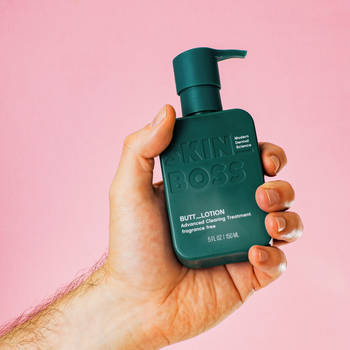
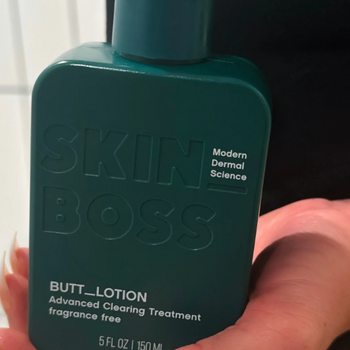
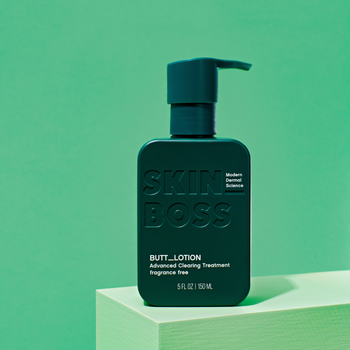
Teen butt bumps deserve the same rule as adult body skin: figure out the follicle before drying everything out. SKINBOSS pairs THE LUXE LOOP™ for controlled physical exfoliation with THE BUTT ACNE TREATMENT™ with salicylic acid + Lactiv® Complex for leave-on chemical exfoliation, moisturization and barrier support; THE PEACH PATCH™ can protect an appropriate individual superficial bump from picking and friction. Puberty may make true acne more likely, but KP, sports-related irritation and folliculitis are still common, so the smartest teen routine treats what is actually there instead of automatically copying a facial acne routine.
References
- American Academy of Dermatology Association / Updated Guidelines for the Management of Acne — https://www.aad.org/news/updated-guidelines-acne-management
- American Academy of Dermatology Association / Acne Clinical Guideline — https://www.aad.org/member/clinical-quality/guidelines/acne
- American Academy of Dermatology Association / Acne: Who Gets and Causes — https://www.aad.org/public/diseases/acne/causes/acne-causes
- American Academy of Dermatology Association / Keratosis Pilaris: Who Gets and Causes — https://www.aad.org/public/diseases/a-z/keratosis-pilaris-causes
- American Academy of Dermatology Association / Keratosis Pilaris: Signs and Symptoms — https://www.aad.org/public/diseases/a-z/keratosis-pilaris-symptoms
- American Academy of Dermatology Association / Acne-Like Breakouts Could Be Folliculitis — https://www.aad.org/public/diseases/a-z/folliculitis
- American Academy of Dermatology Association / Is Sports Equipment Causing Your Acne? — https://www.aad.org/public/diseases/acne/causes/sports-equipment
- American Academy of Dermatology Association / 5 Ways to Help Your Teenager Survive Acne — https://www.aad.org/public/diseases/acne/acne-teenage-five-ways-to-help
- American Academy of Dermatology Association / 7 Reasons to Treat Acne Early — https://www.aad.org/public/diseases/acne/diy/treat-early
SKINBOSS JOURNAL of MODERN DERMAL SCIENCE