Working out can aggravate butt acne-like bumps, but sweat itself usually isn't the whole problem. Tight workout clothing, heat, moisture, repeated friction and staying in damp clothes can irritate or damage hair follicles, making folliculitis and other follicular bumps more likely.
And here's the part people miss: a lot of what gets called “butt acne” after a workout isn't classic acne at all.
Why Do I Get Butt Acne After Working Out?
Workout-related butt bumps often develop because exercise creates a warm, damp, high-friction environment around the hair follicles.
Think about what happens during a 45-minute spin class.
Your skin gets warm. Your leggings become damp. Fabric repeatedly moves against the same follicular openings while your body presses against a bike seat.
That's a very different situation from an oily T-zone.
The American Academy of Dermatology recognizes that tight clothing, rubbing and hot, damp conditions can damage hair follicles and contribute to folliculitis. It also recognizes acne mechanica, acne aggravated when clothing or sports equipment traps heat and sweat while rubbing against acne-prone skin.
So yes, workouts can aggravate breakouts.
But “sweat causes pimples” is an oversimplification.
Is Workout Butt Acne Actually Folliculitis?
Very often, pimple-like bumps on the buttocks can be folliculitis rather than acne vulgaris.
Folliculitis means the hair follicle is inflamed. It can result from infection, irritation or physical damage to the follicle.
AAD specifically notes that tight clothing can rub against hot, damp skin and injure hair follicles. The buttocks are particularly good at creating that environment because they're covered by clothing for most of the workout.
This distinction changes how you think about the problem.
Classic facial acne revolves heavily around the pilosebaceous unit, sebum production and pore blockage.
Workout-related butt bumps may revolve much more around the follicle itself.
That is why taking your strongest face-acne routine and transferring it directly to your butt isn't always particularly clever.
Does Sweat Cause Butt Acne?
Sweat alone isn't the villain. The bigger problem is what happens when sweat remains trapped against follicular skin.
Sweating is normal physiology.
You're supposed to sweat when you exercise.
The problem starts when that moisture sits underneath compression shorts or leggings while the fabric repeatedly rubs the same skin. AAD specifically recommends moisture-wicking workout clothing because moving sweat away from the skin can reduce friction and irritation.
So don't become afraid of sweating.
That would make exercise rather inconvenient.
Manage what happens to the sweat.
Why Do Tight Leggings Cause Butt Breakouts?
Tight leggings can increase friction, trap heat and keep damp fabric in direct contact with follicular openings.
Not everyone who wears leggings gets bumps.
But if you're already folliculitis-prone, the combination can matter.
The fit matters too.
Compression fabric stretched smoothly over the skin is one thing. A thick seam repeatedly moving across exactly the same part of your butt during squats is another.
AAD advises switching from tight-fitting workout clothing to looser options when friction-related acne is a problem. For folliculitis-prone skin, it specifically recommends changing out of tight workout clothes immediately after exercising and showering.
Pay attention to where the bumps occur.
Sometimes the pattern practically draws you a map of the offending seam.
Can Bike Shorts Cause Butt Acne?
They can aggravate it.
Cycling combines tight clothing, heat, sweat, repetitive movement and direct pressure against a seat, so follicular irritation around the buttocks and upper thighs isn't surprising.
AAD actually uses bicycling in hot weather as an example of how tight clothing rubbing against hot, damp skin can damage follicles and contribute to folliculitis.
Cyclists have another variable too: time.
Twenty minutes is different from three hours.
If you regularly develop bumps after cycling, don't just examine your skincare. Look at clothing fit, seams, moisture management, how long you stay in cycling shorts afterward and where the bumps appear relative to the saddle.
Skin problems are sometimes wonderfully literal.
Does Sitting in Sweaty Workout Clothes Cause Butt Acne?
Staying in damp workout clothes extends the exact conditions that can aggravate follicular skin: moisture, heat, occlusion and friction.
Your workout ended 40 minutes ago.
Your skin doesn't know that.
If you're still wearing the same damp leggings while driving home, picking up groceries and answering emails, the follicular environment hasn't really changed.
AAD recommends changing out of tight workout clothes and showering immediately after exercise when trying to prevent folliculitis. Its acne guidance similarly recommends showering and changing clothes after a workout.
This is one of the simplest interventions in the entire article.
Get out of the sweaty pants.
Do You Have to Shower Immediately After Working Out?
Showering soon after exercise is useful for breakout-prone body skin because it removes sweat and material sitting on the skin and lets you get out of damp clothing.
But don't turn this into a hygiene competition.
If you can't shower the second your last rep ends, your skin isn't doomed.
AAD suggests changing out of workout clothes and, when showering isn't possible, gently wiping breakout-prone skin rather than leaving sweat and damp clothing against it indefinitely.
The word gently matters.
You just spent an hour creating friction.
You don't need to celebrate by scrubbing harder.
Can Gym Equipment Cause Butt Breakouts?
Potentially, but not quite the way social media makes it sound.
Shared gym surfaces can harbor microorganisms, which is why AAD recommends disinfecting shared equipment and using a towel as a barrier on surfaces such as workout benches and bicycle seats.
But ordinary recurring butt bumps aren't proof that you sat on a dirty bench.
Folliculitis has multiple causes.
Acne mechanica has another mechanism.
KP has another.
Clean the equipment because it's sensible gym hygiene.
Don't assume every bump came from a contaminated squat rack.
Is It Butt Acne or Keratosis Pilaris From Working Out?
Keratosis pilaris can occur on the buttocks, but exercise doesn't cause KP.
KP is driven by abnormal keratin accumulation around follicular openings.
The bumps are usually small and fairly uniform. The skin often feels rough or sandpapery rather than covered in distinct pimples.
Exercise can make KP look angrier if tight clothing repeatedly rubs the area.
But that's aggravation, not causation.
If you've had the same tiny rough bumps on your butt or thighs for years, including when you weren't exercising regularly, don't automatically blame the gym.
You may have been treating KP like acne for a very long time.
What Is Acne Mechanica?
Acne mechanica is acne triggered or aggravated by heat, sweat and repetitive rubbing or pressure against acne-prone skin.
Athletes get it.
That's why dermatologists gave it a name.
AAD notes that sports clothing and equipment can trap heat and sweat against the skin while rubbing it, producing irritation and breakouts. Early acne mechanica can even begin as small rough bumps that are easier to feel than see.
And yes, that concept can matter around the buttocks.
Tight shorts.
Bike seats.
Workout benches.
Repeated pressure.
But acne mechanica and folliculitis aren't interchangeable diagnoses. If your bumps are persistent or you're not sure what they are, a dermatologist can differentiate them.
Why Doesn't My Face Acne Wash Fix Workout Butt Acne?
Because the underlying problem may not be excess facial-type sebum production.
This is where body acne advice frequently goes off the rails.
People see a pimple-shaped object.
They reach for face acne products.
Then they try to dry the living daylights out of it.
But if you're dealing with irritated follicles plus friction from workout clothing, stripping the barrier can make the skin less tolerant of the mechanical stress it experiences during tomorrow's workout.
Body skin needs follicular management and barrier support.
Not punishment.
Should You Scrub Butt Acne After Working Out?
No.
Aggressive scrubbing can increase irritation on skin that has already experienced friction during exercise.
AAD explicitly advises gentle cleansing of acne-prone skin and warns that scrubbing can worsen acne. Roughly rubbing sweat away with a towel can irritate skin too.
This matters even more on the butt.
Think about what the skin just experienced.
Leggings rubbing.
Bike seat.
Sweat.
An hour of movement.
Then you walk into the shower with an abrasive body scrub and attack it.
Why?
Physical exfoliation can be useful. Aggressive abrasion isn't the same thing.
Controlled exfoliation removes buildup.
Over-scrubbing creates irritation.
Is Physical Exfoliation Good for Post-Workout Butt Bumps?
Gentle physical exfoliation can help remove loose surface buildup, but it should never leave the skin raw, burning or visibly abraded.
The goal isn't to scrape a bump off.
You can't scrub a follicle out of existence.
Physical exfoliation works at the surface. It helps clear loose corneocytes and surface buildup that can contribute to rough texture.
Then chemical exfoliation can address compacted material around follicular openings.
Two different jobs.
And if the skin is actively inflamed, pustular or painful, physical exfoliation may not be appropriate at that moment.
Read the skin.
Does Salicylic Acid Help Workout Butt Acne?
Salicylic acid can be useful when follicular congestion or acne mechanica is contributing to workout-related bumps.
AAD specifically identifies salicylic acid as an over-the-counter ingredient that can help acne mechanica because it helps unclog pores.
It's also useful in body formulations because follicular buildup isn't exclusively a facial phenomenon.
But salicylic acid isn't a diagnosis in a bottle.
If the bumps are caused by infectious folliculitis, a dermatologist may recommend a different treatment.
If they're predominantly KP, moisturizing keratolytic care becomes especially important.
Ingredient choice follows mechanism.
Not the other way around.
Should You Moisturize Workout-Prone Butt Skin?
Yes.
Moisturizing supports the skin barrier, which matters when skin is repeatedly exposed to sweat, cleansing, clothing friction and exfoliating ingredients.
This is where the “butt acne means oily skin” assumption really falls apart.
Your butt isn't your forehead.
And drying body skin aggressively doesn't make the follicle inherently healthier.
A well-formulated routine can exfoliate while also supporting hydration and barrier function.
Those are not contradictory goals.
For body skin, I would argue they belong together.
Are Moisture-Wicking Workout Clothes Better for Butt Acne?
They can be.
Moisture-wicking fabrics move sweat away from the skin and dry more quickly, which may reduce the damp, friction-heavy environment that aggravates breakout-prone skin.
AAD specifically recommends moisture-wicking clothing for athletes prone to acne mechanica and other workout-related skin irritation.
But fabric isn't the only variable.
Fit matters.
Seams matter.
How long you stay in the garment matters.
A high-tech fabric two sizes too small can still rub.
Should You Wear Underwear Under Leggings to Prevent Butt Acne?
There isn't a universal answer.
The better question is whether your clothing system keeps the skin relatively dry and minimizes repetitive friction.
Some underwear adds another seam and another layer of damp fabric.
For someone else, breathable underwear may reduce direct friction from leggings.
Pay attention to your own pattern.
If bumps consistently appear along an underwear line, that's useful information.
If they appear primarily where your bare skin contacts the inside of leggings, that's useful too.
Your skin is giving you data.
Use it.
What Should You Do Immediately After a Workout?
The highest-value step is boringly simple:
Get out of damp workout clothing.
Then shower when practical using a gentle cleanser and warm water.
Pat rather than aggressively rub the skin dry.
If you're using a leave-on exfoliating treatment, apply it according to its directions.
And put on clean clothes.
AAD's folliculitis guidance specifically recommends changing immediately after exercise and showering when tight workout clothing is contributing to the problem.
You don't need a twelve-step post-gym skincare routine.
You need to stop marinating in your spin shorts.
How Do You Prevent Butt Acne If You Work Out Every Day?
You don't need to choose between clear skin and exercise.
Reduce the workout-related triggers, then manage follicular buildup consistently without stripping the barrier.
Wear clean workout clothing.
Choose fabrics and fits that reduce prolonged dampness and rubbing.
Change after exercise.
Shower reasonably soon.
Keep exfoliation controlled.
Moisturize.
And don't treat every bump as evidence that your butt needs to be scrubbed harder.
This is maintenance, not warfare.
How Long Does Workout Butt Acne Take to Clear?
The answer depends on what you're actually treating.
Acne mechanica can improve after the friction trigger is removed and appropriate treatment begins, while recurrent folliculitis or KP may follow different timelines.
AAD recommends seeing a dermatologist if acne mechanica remains after 6 to 8 weeks of treatment.
That's a useful checkpoint, not a promise that every bump should disappear on day 43.
If the skin is improving, keep going.
If it isn't, reconsider the diagnosis.
When Should You See a Dermatologist for Workout Butt Bumps?
Painful, deep, recurrent, spreading or pus-filled bumps deserve medical evaluation, especially if they aren't responding to basic changes in clothing, hygiene and skincare.
Folliculitis can require prescription treatment.
And recurrent painful nodules or draining lesions around the buttocks or groin shouldn't automatically be labeled “gym acne.”
Don't keep escalating exfoliation because a serious bump refuses to behave like a clogged follicle.
Sometimes skincare isn't the answer.
THE SKINBOSS PERSPECTIVE
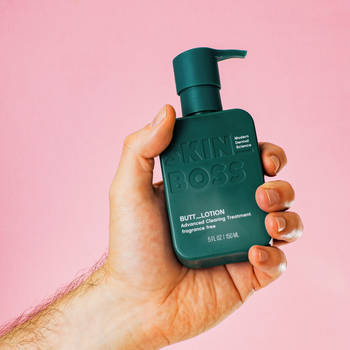
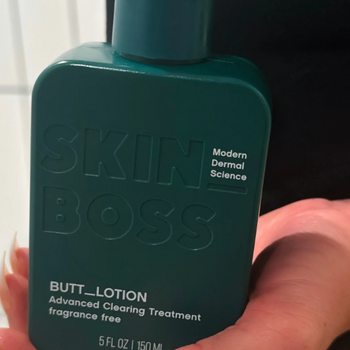
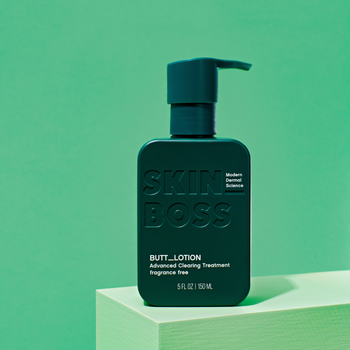
Your workout isn't the enemy. The smarter approach is to reduce the heat, damp clothing and friction around the follicle, then manage buildup without stripping already-stressed body skin. SKINBOSS pairs THE LUXE LOOP™ for gentle physical exfoliation with THE BUTT ACNE TREATMENT™ as the moisturizing chemical exfoliant with salicylic acid + Lactiv® Complex, while THE PEACH PATCH™ can protect an appropriate individual breakout from additional rubbing.
Hot people exfoliate. They also change out of their sweaty leggings.
References
- American Academy of Dermatology Association / Is your workout causing your acne?
- American Academy of Dermatology Association / Is sports equipment causing your acne?
- American Academy of Dermatology Association / Acne-like breakouts could be folliculitis
- American Academy of Dermatology Association / How your workout can affect your skin
- American Academy of Dermatology Association / How to prevent common skin infections at the gym
SKINBOSS JOURNAL of MODERN DERMAL SCIENCE