If you've ever Googled "why do I have pimples on my butt," you're in good company. Butt breakouts — often called buttne — are one of the most searched, least talked-about skin concerns out there. The good news: it's almost always treatable, and in most cases, it isn't acne at all.
What Is Butt Acne, Really?
Most "butt acne" is actually folliculitis — inflammation or infection of a hair follicle — not acne in the clinical sense. True acne forms in oil glands attached to hair follicles on the face, chest, and back. The skin on your buttocks has fewer oil glands but plenty of hair follicles, which makes it more prone to follicle irritation than classic acne.
What Causes Buttne?
- Friction and sweat — from sitting for long periods or tight workout gear
- Clogged follicles — dead skin and product buildup blocking the opening
- Bacterial or fungal overgrowth — including yeast-driven "fungal acne"
- Ingrown hairs — especially after shaving or waxing
- Fabric and detergent irritation — synthetic fabric and residue buildup
Most people deal with more than one of these at once, which is part of why butt acne can feel so stubborn compared to facial breakouts. A tight-fitting waistband trapping sweat during a workout, for example, creates the exact warm, damp environment that both bacteria and yeast thrive in — and if you're also shaving that area, you've added a third contributing factor on top.
Butt Acne vs. Folliculitis vs. Keratosis Pilaris
These three conditions get confused constantly because they can all show up as small, rough bumps on the buttocks and thighs — but they respond to different treatments, so telling them apart actually matters.
Folliculitis
Small red or white-headed bumps, often itchy or mildly tender, usually clustered around hair follicles. This is what most people mean when they say "butt acne." It responds well to antibacterial and exfoliating ingredients like salicylic acid.
Keratosis Pilaris (KP)
Rough, sandpaper-like bumps that are usually skin-colored rather than red, and typically not itchy or painful. KP is caused by a buildup of keratin in the hair follicle rather than bacteria, so it's more of a texture issue than a breakout. It's also chronic and genetic — it can be managed, but not cured.
Contact Dermatitis
Red, itchy patches that sometimes have a bumpy texture, usually triggered by a specific fabric, detergent, or skincare product. Unlike folliculitis or KP, this tends to clear up quickly once the irritant is identified and removed.
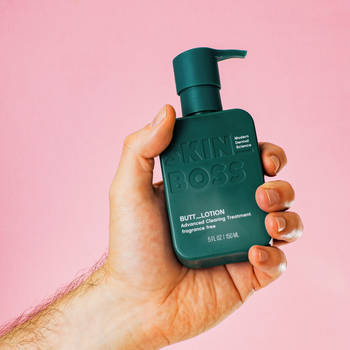
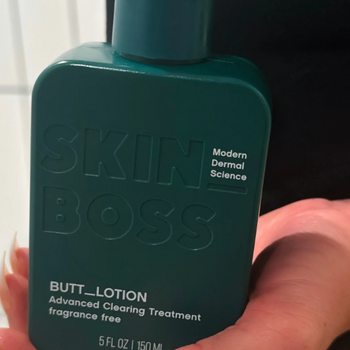
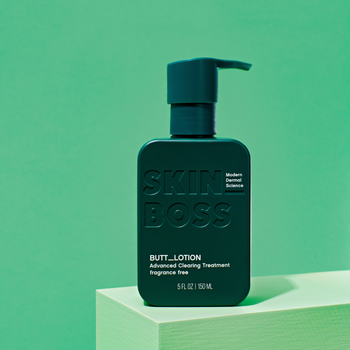
The SkinBoss Routine

Ingredient Glossary
- Salicylic Acid (BHA)
- Oil-soluble exfoliant that clears buildup inside the follicle.
- Lactiv® Complex (AHA)
- Clears gently, all day. A hydrating exfoliation blend of ammonium lactate, sodium lactate, betaine, and sodium stearoyl lactylate that resurfaces skin around the clock without irritation.
- Benzoyl Peroxide
- Antibacterial ingredient that targets acne- and folliculitis-causing bacteria.
Preventing Buttne From Coming Back
Treating an active breakout is only half the equation — a few habit changes make a real difference in how often it returns:
- Change out of sweaty clothes quickly — don't sit in wet workout gear or a damp swimsuit longer than necessary
- Choose breathable fabrics — cotton and moisture-wicking synthetics reduce trapped heat and friction
- Wash bedding and workout gear regularly — bacteria and detergent residue on unwashed fabric can reintroduce the problem
- Avoid sitting in the same position for hours — standing or shifting position periodically reduces prolonged friction
When to See a Dermatologist
Most butt acne responds well to a consistent at-home routine within a few weeks. That said, it's worth talking to a dermatologist if you notice:
- Large, painful lumps under the skin that don't come to a head
- No improvement after 6–8 weeks of consistent care
- Signs of a spreading infection — increasing redness, warmth, or fever
- Bumps that keep recurring in the exact same spots despite treatment
These can sometimes indicate a deeper skin infection or a condition that needs a prescription-strength approach rather than an over-the-counter routine.
Shop the routine
THE LUXE LOOP™, THE BUTT ACNE TREATMENT™, THE PEACH PATCH™